

St. Catharines Community Guide
St. Catharines.
The Garden City.
Living in St. Catharines means more than buying a house in a smaller Niagara city. Lake Ontario, the Welland Canal, established residential communities, a downtown arts district and the surrounding farmland all shape daily life here in ways a listing photo cannot show. This St. Catharines community guide covers the everyday side of the city, written by two people who live here.
Living in St. Catharines feels noticeably different from life in a large GTA city. The pace is quieter, everyday destinations sit closer together, and Lake Ontario, the Welland Canal, beaches, parks and trails become part of an ordinary week rather than a day trip.
St. Catharines is not Toronto on a smaller scale. Shopping is more limited, nightlife is quieter, and regular travel to Toronto takes planning. What the city offers instead is waterfront access, established residential communities, Brock University, Niagara Health’s Marotta Family Hospital and the wider Niagara Region close by.
One recent development also belongs in an honest St. Catharines community guide. Three 100-year rainstorms in July and August 2026 caused widespread flooding across the city, making drainage and flood protection important property-level questions for anyone considering a home here.
Lake Ontario and the Welland Canal give St. Catharines two completely different waterfront experiences.
Port Dalhousie, Sunset Beach, Lakeside Park and local trails make outdoor spaces part of everyday life.
Niagara-on-the-Lake, Niagara Falls, Vineland and Niagara’s farm country are close enough to visit regularly.
What Is Living in St. Catharines Really Like?
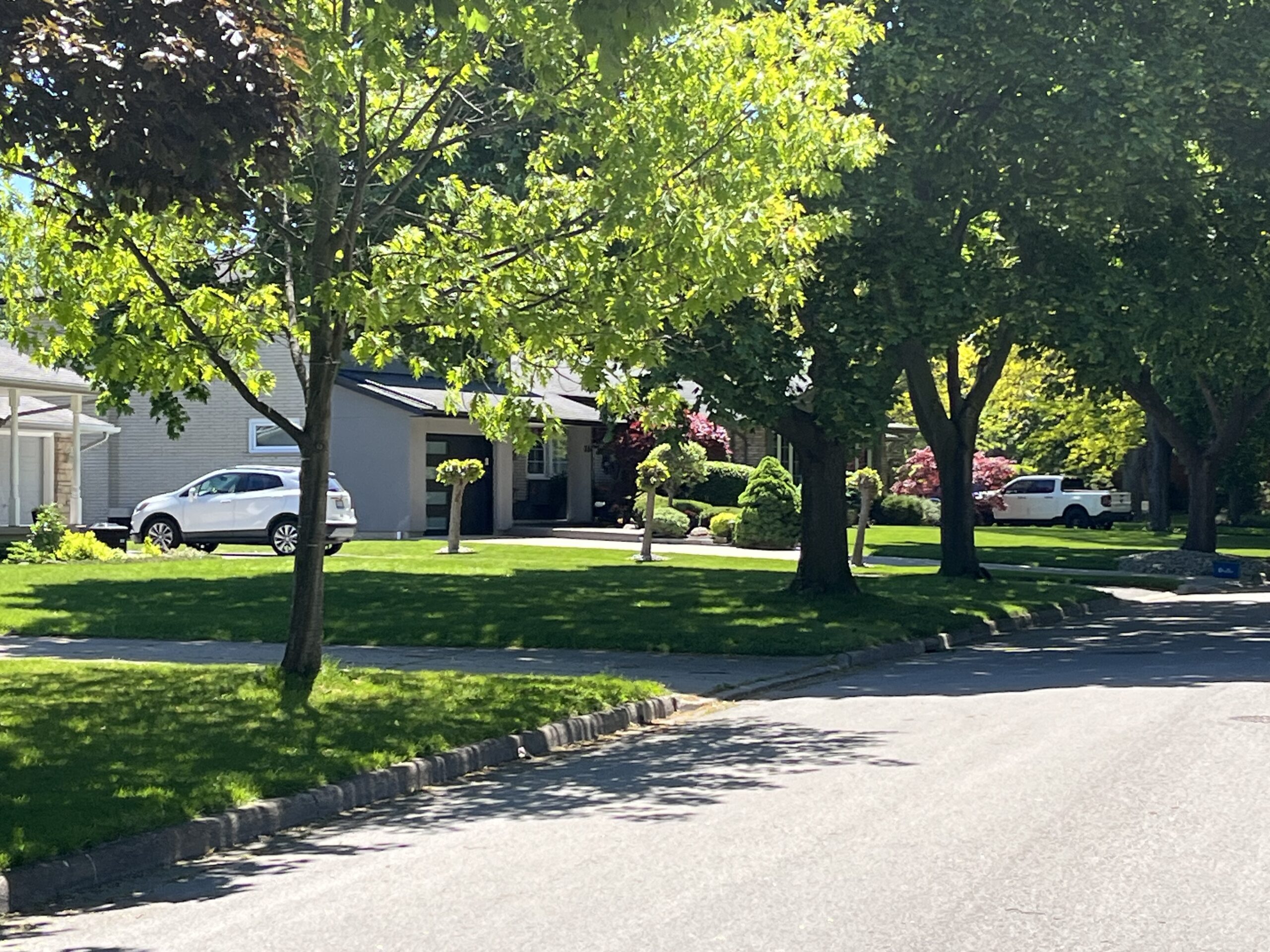
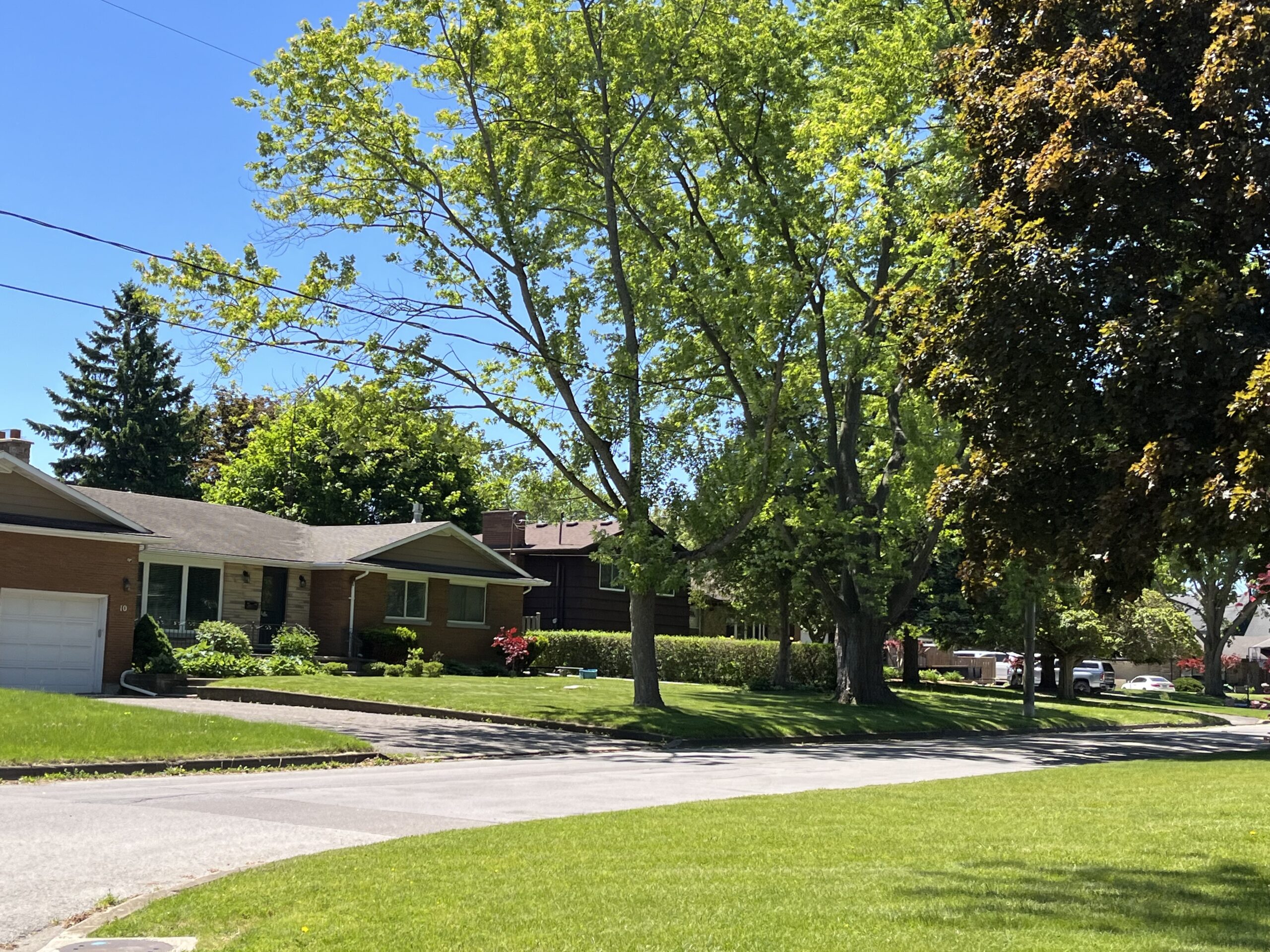
St. Catharines is a smaller, greener and quieter city than most GTA residents expect. Mature trees line established streets, gardens are noticeable throughout many residential communities, and water is never far away.
What struck us first was the beauty of many established streets. Homeowners here put real effort into their gardens, and mature landscaping gives entire blocks a settled, cared-for appearance.
Everyday distances also feel manageable. From our house, the gym is about ten minutes away and Farm Boy is roughly 15 to 20 minutes by car. Because grocery stores, restaurants, parks and services sit throughout the city, daily errands rarely require a long cross-city drive.
Residential streets become remarkably quiet at night. By around 10 p.m., the contrast with the traffic and activity we were accustomed to in the GTA is obvious.
Still, quiet does not mean the city shuts down. In summer, Montebello Park and Port Dalhousie fill with concerts, community events and waterfront gatherings. You can enjoy all of that and then return to a neighbourhood that feels remarkably peaceful.
Lake Ontario and the Welland Canal
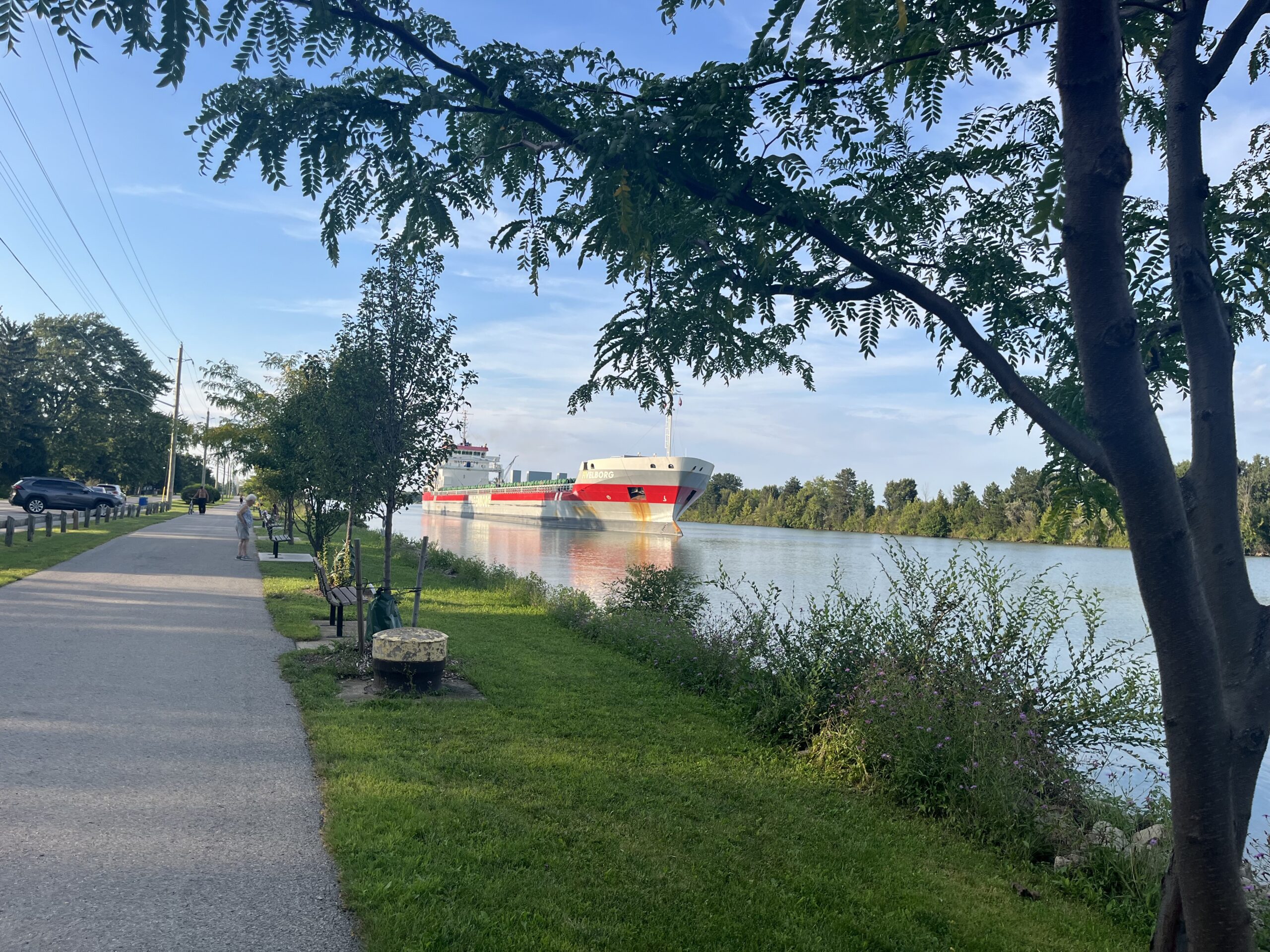
Lake Ontario and the Welland Canal give St. Catharines two very different relationships with water.
The Lake Ontario waterfront feels peaceful. On a walk you may notice birds, butterflies and other wildlife, while the open lake creates a completely different atmosphere from the city streets nearby.
By contrast, the Welland Canal feels active. People walk, run and cycle beside a working shipping corridor while large vessels move through the locks carrying goods.
Watching one of those ships pass close to the trail is difficult to appreciate until you see it. The canal is not simply transportation infrastructure. Instead, it is part of the landscape and the recreational life of the city.
For current information about the working waterway, see the Great Lakes St. Lawrence Seaway System .
Port Dalhousie and Lakeside Park
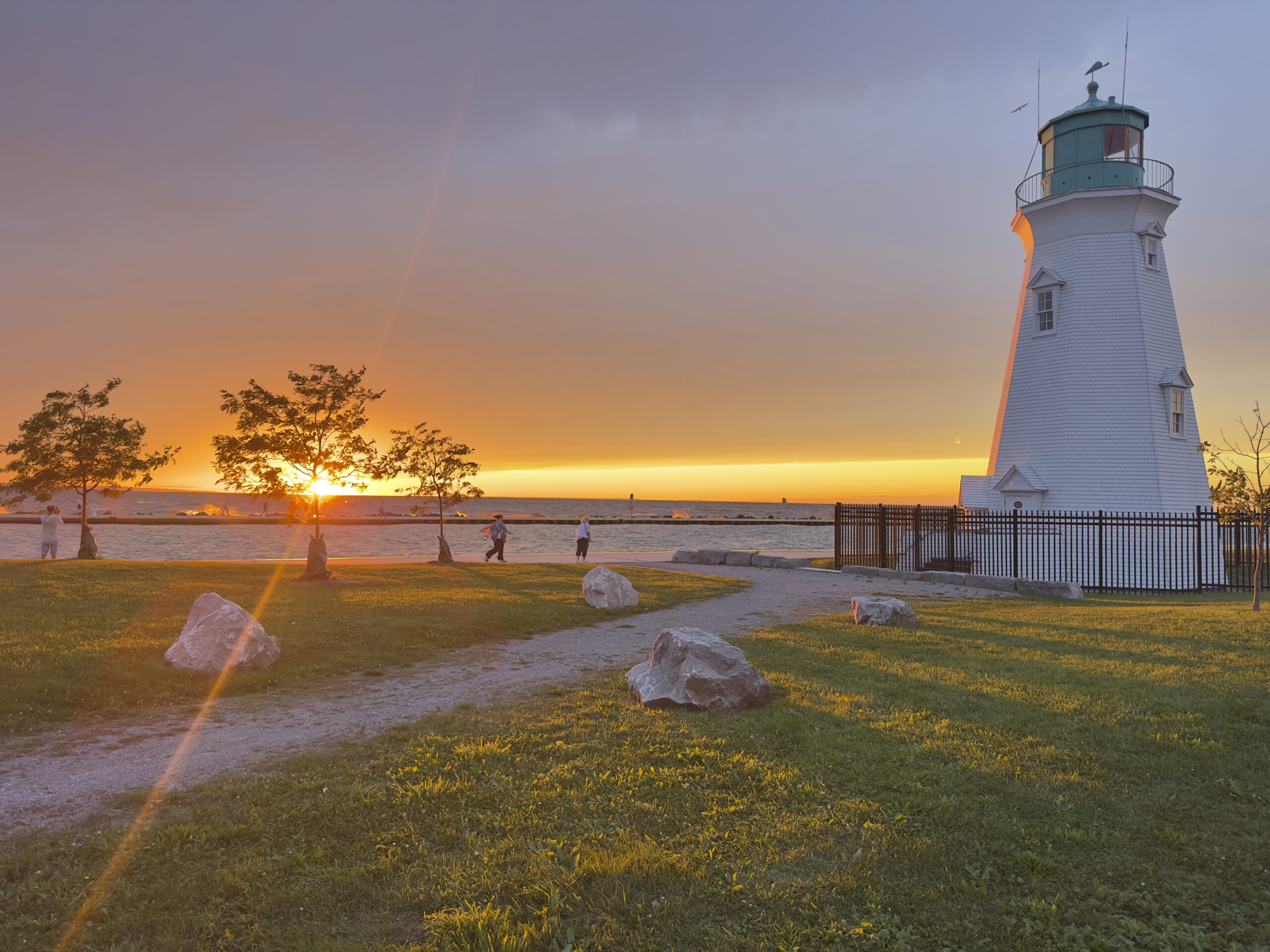
Port Dalhousie combines a Lake Ontario waterfront, harbour, beach, parkland, restaurants and established residential streets in one of the city’s most recognizable communities.
It is one of our favourite parts of the city because a visit does not need to be a special occasion. We can walk, have something to eat, spend time beside the water or watch the sunset.
The Port Dalhousie Inner Range Lighthouse sits at the end of the pier. The current structure dates to 1898, and the City describes it as one of only three remaining octagonal lighthouses on the Great Lakes, designated under the Ontario Heritage Act. It is the image most people picture when they think of this part of the city.
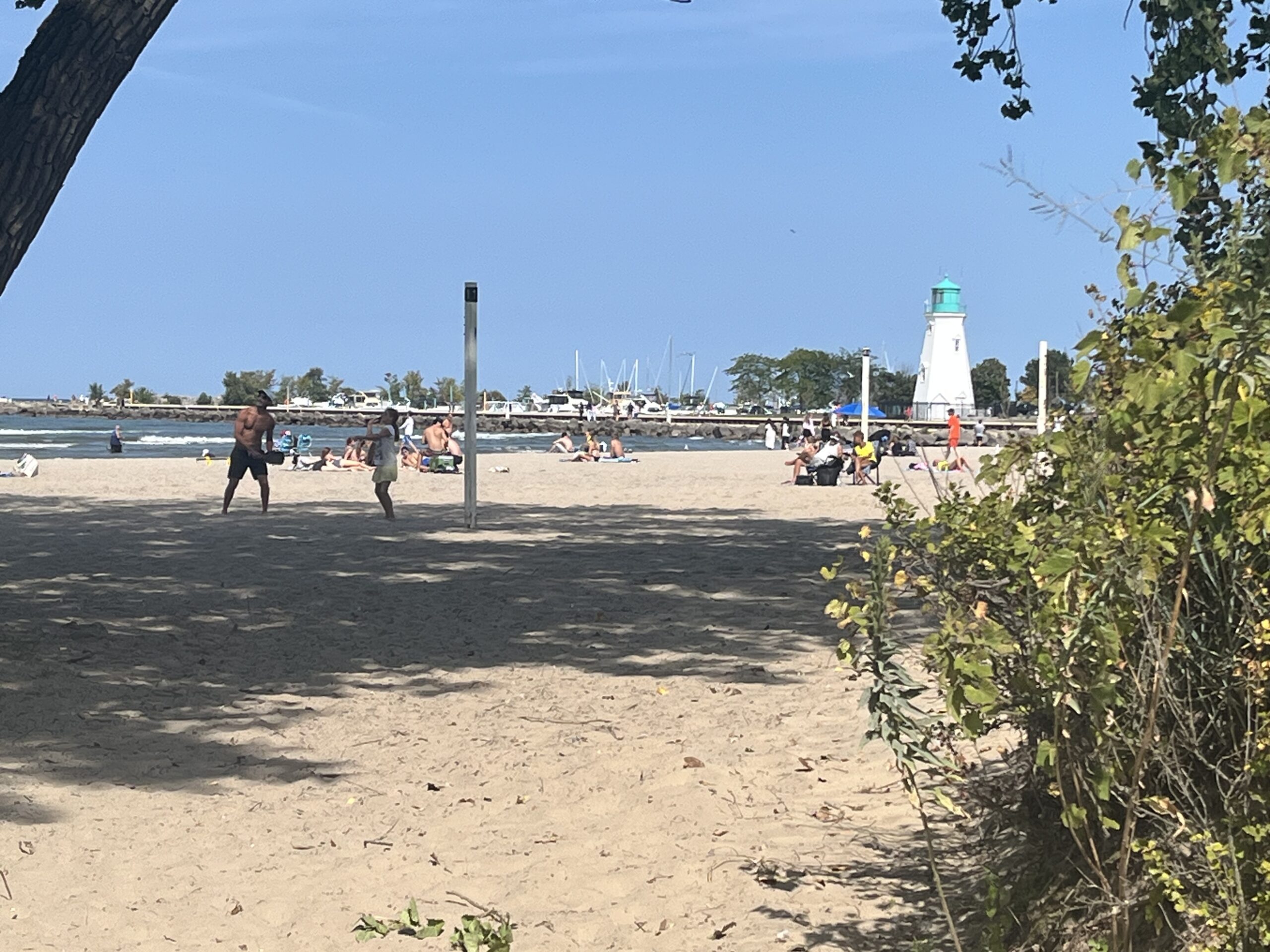
Lakeside Park Beach in Port Dalhousie. Photo by Keith & Françoise.
Summer brings more activity to the waterfront. For example, the Port Dalhousie Supper Market has brought food, beverages and live music to Lakeside Park during its summer season. Because seasonal programming changes, check the organizer’s current information before planning a visit.
The City of St. Catharines also publishes current information about public beaches and waterfront facilities.
For a closer look at this part of the city, read our Lakeshore St. Catharines guide .
Sunset Beach
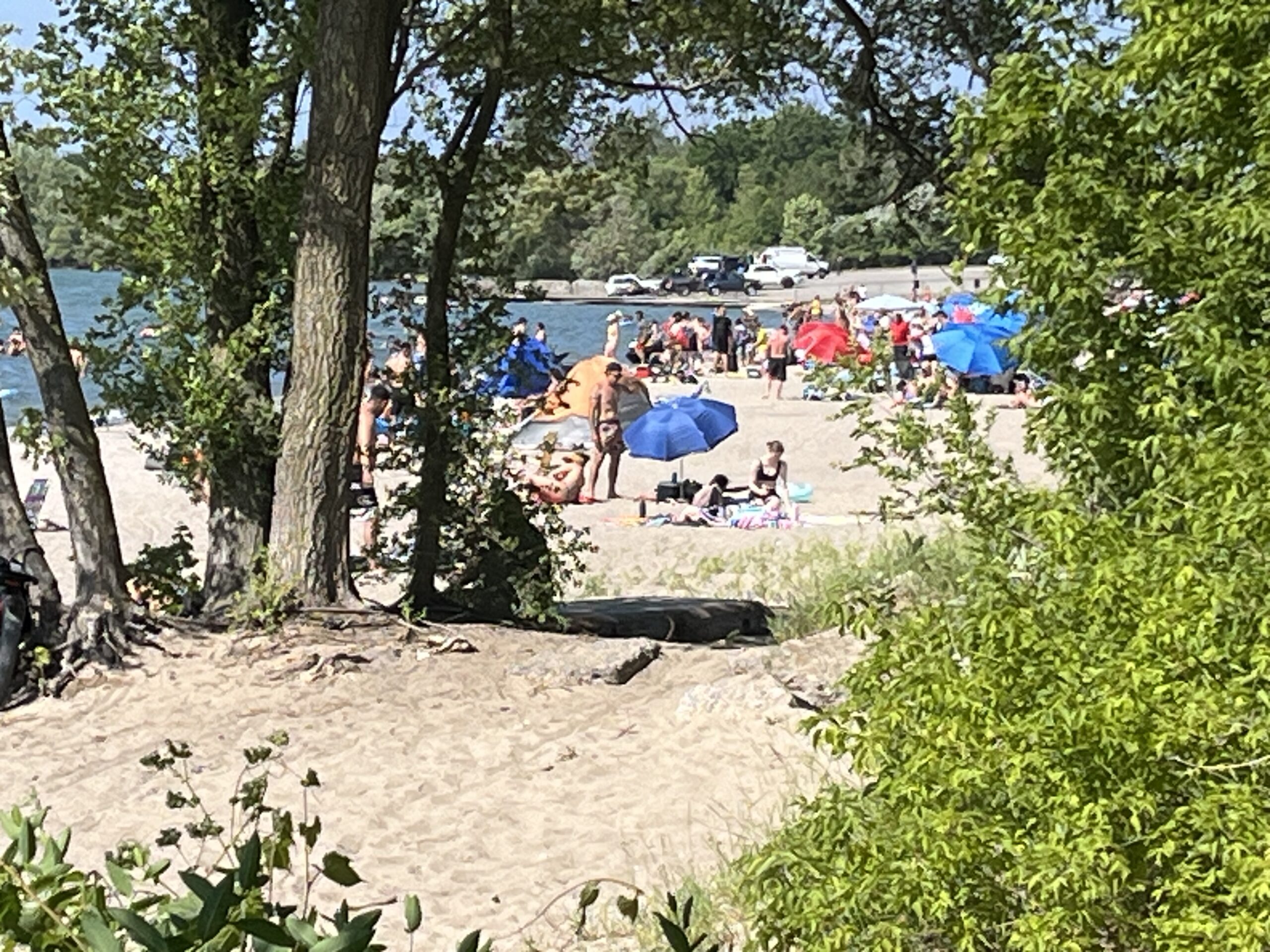
Sunset Beach gives residents another way to reach Lake Ontario without leaving the city. It sits only a few minutes from our house, yet it feels removed from everyday city life.
On warm days, people swim, sit on the sand, picnic and spend the afternoon beside the lake.
That said, we would not call St. Catharines a beach town, because that creates the wrong expectation. A better description is a city where Lake Ontario beaches, waterfront parks and trails are genuinely accessible.
Downtown St. Catharines and the Arts District
Downtown St. Catharines is a genuine arts district rather than simply a commercial core. Restaurants and local businesses sit alongside performance venues and a university campus.
The FirstOntario Performing Arts Centre at 250 St. Paul Street brings theatre, music and film downtown. Next door, Brock University’s Marilyn I. Walker School of Fine and Performing Arts occupies the restored Canada Hair Cloth factory at 15 Artists’ Common and has anchored the district since 2015.
The Meridian Centre adds sports and larger touring events to the same few blocks. Together, these venues keep the core active on evenings when residential streets are quiet.
Montebello Park
Montebello Park provides a historic green gathering place near downtown. Mature trees, the rose garden, the fountain and the bandshell give the park its character.
In 2026, the City ran a Concerts in the Park series of six concerts at Montebello Park, featuring local and touring Canadian musicians. Programming changes each year, so check the City’s current schedule before making plans.
The St. Catharines Farmers Market and Local Food

The St. Catharines Farmers Market connects downtown with the farmland surrounding the city, and it has operated since 1848.
The market runs at Market Square, 91 King Street. The City currently lists Saturday hours year-round from 7 a.m. to 2 p.m., plus Thursday hours from February through December, 8 a.m. to 2 p.m.
Saturday mornings get busy. We also buy vegetables and other seasonal produce directly from farms and roadside stands around Niagara, where the prices are sometimes better than the supermarket.
In practice, that access changes how you experience the region. Niagara’s farmland stops being somewhere you visit on a weekend and becomes part of an ordinary week.
Why Is St. Catharines Called the Garden City?
St. Catharines is called the Garden City because of the fruit growing lands and extensive gardens that have defined the area for generations, and the City’s own symbols still record that history.
According to the City’s official emblems and symbols , the green in the municipal logo represents the fruit growing lands, while the four blue lines represent the four Welland Canals. On the coat of arms, the cornucopia reflects the rich agriculture and abundant fruit growing lands around the city.
The City’s official flower reinforces the point. The chrysanthemum was chosen by the Garden City Horticultural Society during centennial celebrations in 1976, selected for its range of colours and its hardiness.
That history is easy to connect with when you drive through established residential communities today. Mature trees, landscaping and well-kept gardens shape the character of entire streets.
Two Niagara Garden Centres We Enjoy
We like visiting Sunshine Express Garden Centre in Niagara-on-the-Lake and The Watering Can in Vineland.
The Watering Can is more than a traditional nursery, and its Christmas displays are particularly impressive.
Neither business sits inside the city, and that is part of the point. Living in St. Catharines puts enough of Niagara within reach that places like these become part of an ordinary weekend.
Education, Healthcare and Community Institutions
St. Catharines serves as the education, healthcare and cultural centre of the northern Niagara Region.
Brock University’s main campus sits on the Niagara Escarpment at 1812 Sir Isaac Brock Way, and the university contributes to the employment, research and cultural life of the city. The District School Board of Niagara serves public elementary and secondary students across the region.
Niagara Health’s Marotta Family Hospital
Healthcare has a major presence here. Niagara Health’s Marotta Family Hospital sits at 1200 Fourth Avenue. Niagara Health lists emergency medicine, critical care, surgery, specialized mental health services and women’s, babies’ and children’s healthcare among the services at the site.
The hospital opened in 2013 as the St. Catharines Site and was renamed in 2024. Together with the shopping and services around Fourth Avenue, it anchors the west side of the city.
Homes and Communities in St. Catharines
St. Catharines changes noticeably as you move from one part of the city to another. There is no single housing style or community experience that represents the whole city.
Established areas include bungalows, two-storey houses, split-level homes and older character properties. Elsewhere you will find townhouses, condominiums, newer construction and infill development.
The Lakeshore Community
The Lakeshore Community is an established residential part of St. Catharines near Lake Ontario. Mature streets and proximity to the lake shape its character, while Port Dalhousie and other waterfront destinations sit close by.
Martindale offers a different residential setting with convenient access to shopping and services around Fourth Avenue. Meanwhile, downtown and the surrounding central communities contain older housing and put residents closer to restaurants, theatre and city events.
On the eastern side of the city, the Welland Canal becomes a much more visible part of the landscape. Other areas have a more traditionally suburban feel.
Because of that variety, we would not choose an area based only on a community name or an online ranking. Two homes at a similar price can offer very different surroundings and day-to-day experiences.
The July and August 2026 Flooding
St. Catharines experienced severe and widespread flooding in the summer of 2026, and anyone considering a move here should understand what happened.
According to the City of St. Catharines flooding response and recovery page , the city was hit by three 100-year rain storms between July 21 and August 2, 2026, delivering more than 300 mm of rainfall. The storms overwhelmed road, sewer and stormwater infrastructure, caused significant property damage and shoreline erosion, and affected thousands of residents in every part of the city.
Mayor Mat Siscoe declared a state of emergency on August 3, 2026. Afterward, the City reported receiving more than 3,500 applications for its Flood Alleviation Program, a program that had previously supported roughly 30 applicants a year.
What the City Is Doing
In response, Council transferred up to $5 million from the wastewater reserve fund and $15 million from the wastewater capital projects budget to a new Emergency Flood Alleviation Program . The program reimburses eligible homeowners for 90 per cent of the cost, to a maximum of $5,000, of eligible flood protection devices such as backwater valves, sump pits and weeping tile disconnection, including installation.
The Mayor also directed staff to report back on an independent flood resilience review, priority mitigation areas and stormwater maintenance practices. Council has since established a Flood Resilience Task Force.
What This Means If You Are Buying Here
Flooding did not affect every property equally, and a blanket conclusion about any community would be wrong. However, the questions worth asking are now more specific than they used to be.
Ask whether the home has a mainline backwater valve, whether weeping tiles are connected to the sanitary sewer or to a sump pump system, and whether a backup pump is installed. Ask about past water entry and request any related documentation. Finally, confirm what overland water and sewer backup coverage an insurer will actually provide before you commit, because coverage varies by property and by insurer.
These are reasonable questions anywhere in Ontario. In St. Catharines right now, they are essential.
Shopping and Everyday Convenience
St. Catharines handles everyday shopping well, although it does not offer the retail scale of Toronto or the larger GTA cities.
Grocery stores, pharmacies, gyms, restaurants and services sit throughout the city. The Pen Centre provides the main indoor shopping destination.
What we miss are the larger centres such as Square One, Sherway Gardens and Yorkdale, particularly when we want a broader selection of higher-end clothing.
One adjustment Françoise noticed personally is the smaller selection of organic and specialty foods compared with what she was accustomed to in the GTA. Niagara-grown produce is easy to find here, but the specialty grocery range is narrower.
St. Catharines Is Not Toronto on a Smaller Scale
Someone looking for Toronto’s shopping, nightlife, restaurant selection and constant activity may find St. Catharines too quiet.
Someone who values quieter streets, shorter local drives, waterfront access and a slower pace may see those same differences as advantages.
The question is not which lifestyle is better. It is which lifestyle suits you.
To compare the financial side separately, including housing, property tax and other ownership costs, see our GTA vs. St. Catharines Cost of Living guide .
Getting Around St. Catharines
Everyday trips within St. Catharines are usually shorter than what residents of larger GTA municipalities are accustomed to.
GO Transit
St. Catharines GO is located at 5 Great Western Street on the Lakeshore West line. Before you count on it for commuting, two details matter: the station is unstaffed, and GO advises that free customer parking is not available there. The station does have bike racks.
Train service is also limited compared with GO stations inside the GTA, because only a portion of Lakeshore West trips continue past Hamilton into Niagara. Therefore anyone planning to commute by train should check current departures directly with GO Transit before making an offer on a house.
Driving Toward the GTA
Highway traffic can become difficult, especially during busy travel periods and the summer tourism season when visitors head toward Niagara Falls, Niagara-on-the-Lake and area wineries.
Our advice is simple. Drive the route at the times you would actually travel, in both directions, before you decide. Distance on a map does not tell you what a regular commute will feel like.
For a broader discussion, see our Moving From the GTA to the Niagara Region guide .
Living in St. Catharines Puts Niagara Close By
Living in St. Catharines also means much of the wider Niagara Region becomes part of everyday life rather than a day trip.
Niagara-on-the-Lake is a good example. We can go for lunch, walk the historic district, visit shops or have dinner without treating the outing as a major expedition.
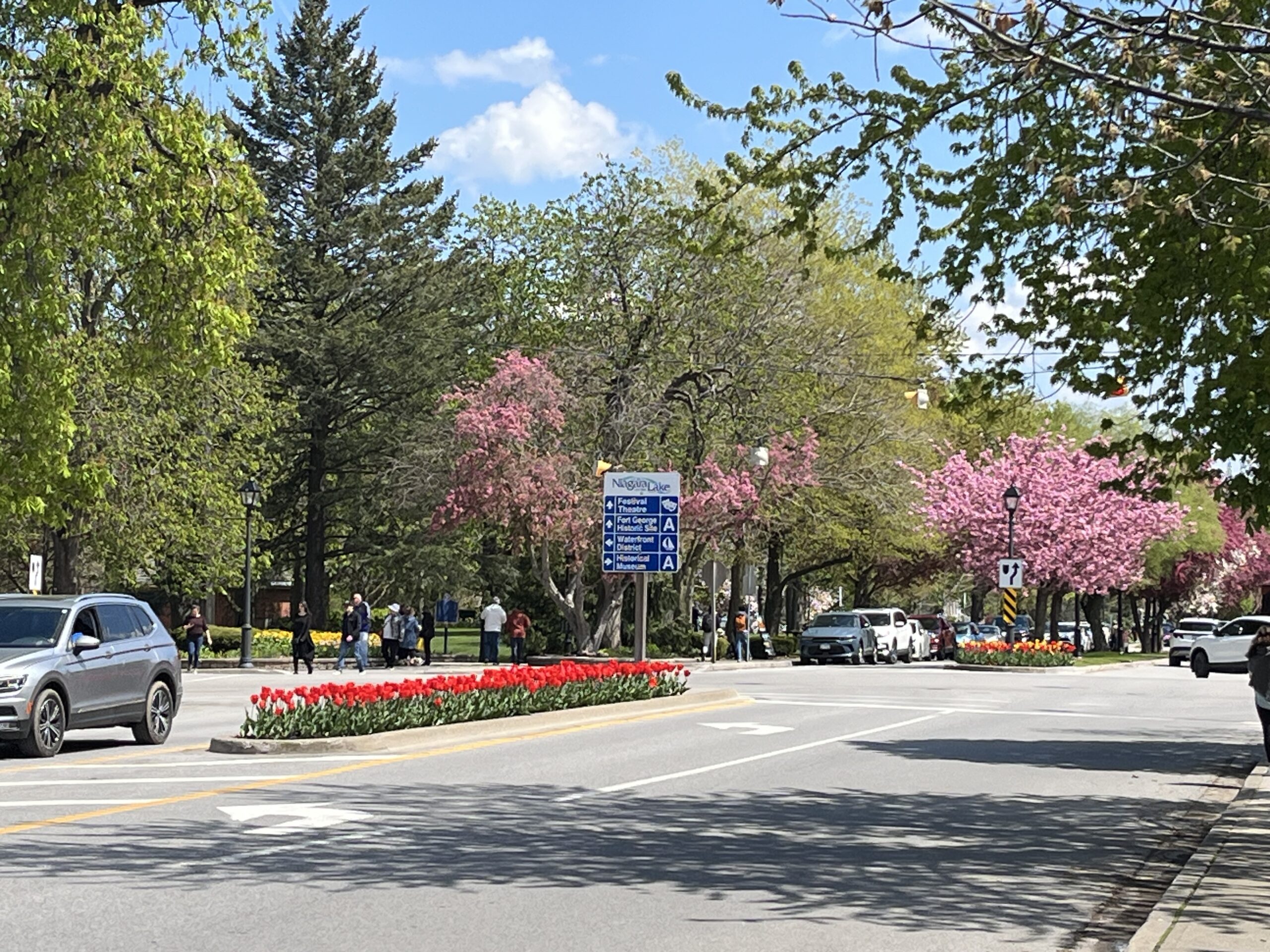
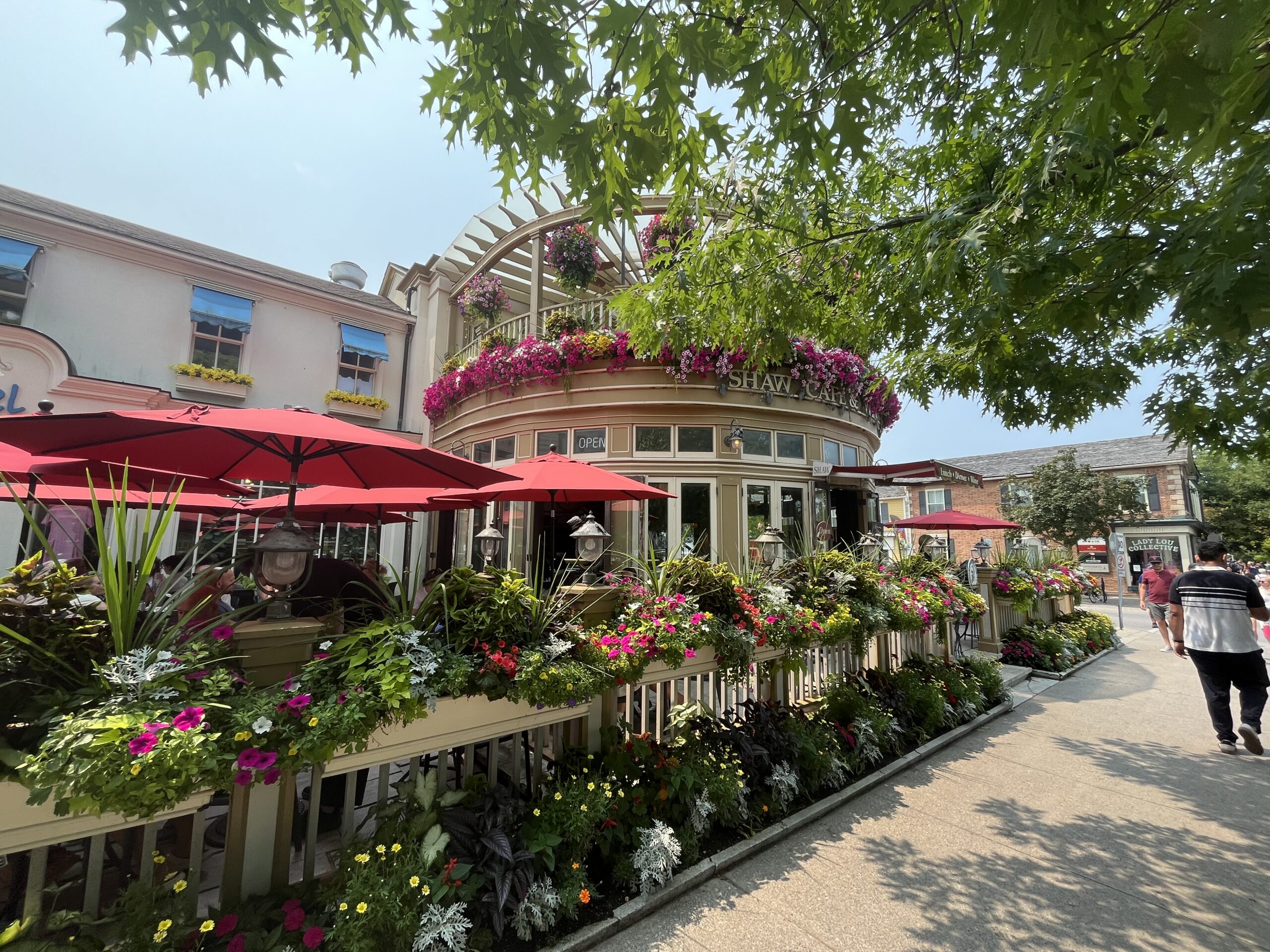
Spring and summer in Niagara-on-the-Lake. Photos by Keith & Françoise.
We have also chosen Niagara-on-the-Lake for special occasions, including our wedding anniversary. We can enjoy the restaurants and surroundings without planning an overnight stay or facing a long drive home.
That captures part of the appeal. A place can be close enough for lunch on an ordinary afternoon and still feel special enough for a celebration.
Niagara Through the Seasons
Spring and summer bring farm stands, gardens, waterfronts and patios. Autumn changes the landscape again, while winter brings a different set of traditions.
Niagara Falls hosts the annual Winter Festival of Lights . Niagara Falls Tourism lists the 2026-27 festival from November 14, 2026 through January 10, 2027. Because dates change each year, confirm the current schedule before visiting.
We also enjoy driving through Niagara-on-the-Lake during the Christmas season, when some homes put up impressive light displays that turn the drive itself into part of the evening.
Living in St. Catharines gives you the city itself, and it also puts the wider Niagara Region on your doorstep.
What Is Winter Like in St. Catharines?
Winter in St. Catharines brings snow, freezing temperatures, ice and periods of severe weather, so winter driving and snow clearing become part of seasonal life.
Conditions vary from storm to storm. We would not assume the weather here always matches Toronto on the same day simply because the QEW connects the two cities.
A St. Catharines Community Guide Should Also Discuss the Challenges
A useful St. Catharines community guide should show more than waterfront photographs and attractive residential streets.
Some parts of the city have visible homelessness, substance use and people experiencing significant hardship. These conditions do not affect every part of St. Catharines in the same way, and they should not be used to label entire communities or the people living in them.
The 2026 flooding sits alongside this as a genuine challenge the city is actively working through, rather than something a community guide should quietly omit.
Our recommendation is to spend time in the areas you are considering. Visit at different times of day, drive the surrounding streets and form your own impression.
Who Might Enjoy Living in St. Catharines?
Living in St. Catharines appeals most to people who want a smaller-city pace while keeping everyday services, healthcare, education, recreation and entertainment nearby.
Retirees and downsizers often appreciate the shorter local distances and the access to outdoor spaces. Families tend to value the established residential communities and parks. People who work locally, remotely or on a hybrid schedule also find the location practical.
Someone who wants extensive luxury shopping, Toronto-style nightlife or a highly urban lifestyle may reach a different conclusion. Similarly, frequent Toronto commuters need to weigh the transportation trade-off carefully.
If we were introducing someone to St. Catharines for the first time, we would not simply drive them past houses for sale. We would show them the Welland Canal, Port Dalhousie, Martindale, Fourth Avenue, the downtown arts district, Sunset Beach and the Lake Ontario waterfront. Those places explain the city better than a list of community names ever could.
Our purpose would not be to convince anyone that St. Catharines is right for them. It would be to let them experience enough of the city to decide for themselves.
We live in St. Catharines and work with clients across both the GTA and Niagara Region. That gives us a useful perspective on the differences between the two, from the pace of everyday life to transportation, housing styles and the practical adjustments people notice after a move.
Françoise Pollard, Realtor®, has been licensed in real estate since 2006. Together with Keith Goldson, Broker, the team brings decades of combined experience helping clients make buying, selling, leasing and relocation decisions.
The observations in this St. Catharines community guide come from living in the city, combined with information from municipal, transportation, healthcare and educational sources.
If you are comparing St. Catharines with other parts of Niagara, start with our Community Guides. If you are coming from the GTA, our GTA to Niagara relocation guide looks at the broader move in more detail.
See the City Before You Choose the Community
Online research can tell you a great deal, but it cannot show you how different parts of St. Catharines feel in person. We can help you understand the communities and housing options before you narrow your search.
Frequently Asked Questions About St. Catharines
Living in St. Catharines
Is St. Catharines a quiet city?
Many residential communities in St. Catharines become quiet in the evening, especially compared with larger GTA cities. The downtown arts district, summer events, restaurants and waterfront areas provide more active options when residents want them.
Does St. Catharines have access to Lake Ontario?
Yes. Port Dalhousie, Lakeside Park Beach, Sunset Beach and other waterfront areas provide public access to Lake Ontario in St. Catharines. The Welland Canal offers a separate waterfront and trail experience on the eastern side of the city.
Why is St. Catharines called the Garden City?
St. Catharines is called the Garden City because of the fruit growing lands and extensive gardens in the area. The City of St. Catharines states that the green in its logo represents the fruit growing lands and that the cornucopia on its coat of arms reflects the rich agriculture surrounding the city. The official City flower is the chrysanthemum, chosen by the Garden City Horticultural Society in 1976.
Transportation and Everyday Life
Does St. Catharines have GO Transit?
Yes. St. Catharines GO is located at 5 Great Western Street on the Lakeshore West line. The station is unstaffed and GO Transit advises that free customer parking is not available there, so commuters should check current departures and parking options directly with GO Transit.
Is St. Catharines similar to Toronto or the GTA?
No. St. Catharines is a smaller city with a quieter pace, shorter local distances and easier access to waterfront and outdoor spaces. It does not provide the same scale of shopping, nightlife or urban activity as Toronto.
Buying a Home Here
Was St. Catharines affected by flooding in 2026?
Yes. The City of St. Catharines reports that three 100-year rain storms between July 21 and August 2, 2026 brought more than 300 mm of rainfall, overwhelmed City infrastructure and affected thousands of residents across the city. Mayor Mat Siscoe declared a state of emergency on August 3, 2026, and the City later created an Emergency Flood Alleviation Program reimbursing eligible homeowners 90 per cent of the cost of approved flood protection devices, to a maximum of $5,000.
What should someone know before living in St. Catharines?
Living in St. Catharines offers a smaller-city lifestyle with Lake Ontario beaches, the Welland Canal, Brock University, Niagara Health’s Marotta Family Hospital and the wider Niagara Region close by. People moving from the GTA should also weigh the smaller retail selection, limited GO train service and the property-level flood protection questions raised by the 2026 storms.
This St. Catharines community guide combines our personal observations as residents with information from municipal, transportation, healthcare and other public sources, current as of September 2026. Lifestyle experiences vary by person and by property. Travel times, transit schedules, events, services, municipal programs and flood recovery measures can change, and program eligibility is determined by the administering body, not by us. Nothing here is insurance, legal or financial advice. Readers should independently verify any information that matters to their decisions and consult qualified professionals about property condition, insurance coverage and flood risk. Françoise Pollard is a licensed Realtor® and Keith Goldson is a Broker with the Keith & Françoise Real Estate Team, eXp Realty Brokerage, serving the GTA and Niagara Region.