

Whether a basement apartment is legal in Ontario depends on the building and fire safety rules that apply to it, municipal zoning, and any required permits or registration. A newly created suite generally needs a building permit and a passed final inspection, while an older unit may be lawful under earlier rules, so its history and municipal records matter. Under the 2024 Ontario Building Code, new secondary suites have requirements for ceiling height, bedroom windows, interconnected alarms and fire protection between the units.
Mississauga and Brampton publish registries you can search. Toronto, Vaughan and Oakville don’t, so you check the permit record instead. Ontario’s Residential Tenancies Act generally applies to tenancies in basement apartments, even where the unit has permit or compliance issues, though certain exemptions may apply, including some shared-kitchen or shared-bathroom arrangements.
This article is part of our guide to buying a home in Ontario, which covers the complete purchase process. It goes deeper on legal basement apartments: the requirements, how to check a suite before you buy, and what you inherit with a tenant.
- What makes a basement apartment legal
- Building Code requirements
- Four common permit situations
- How to check a suite by city
- How to make a basement apartment legal
- Older suites and the two key dates
- Tenants and N12 notices
- How lenders count the rent
- What it costs
- Options when the permit isn’t closed
- What goes in your offer
- Your questions answered
What Makes a Basement Apartment Legal in Ontario?
Each of the three tests (Building Code, Fire Code and zoning) works on its own. A suite can satisfy zoning and still fail the Fire Code, or look finished and well built with no permit on file at all. An older suite may be lawful under the rules covered in the section on older suites.
Zoning used to be the hard part. Under Bill 23, the More Homes Built Faster Act, 2022, the Planning Act now requires municipalities to permit up to three residential units on serviced urban residential land, including a detached house, semi or townhouse. Toronto permits up to four units as of right in Neighbourhoods city-wide, and up to six in the Toronto and East York District and Ward 23. Mississauga permits fourplexes as of right.
So the real question is usually whether the unit was built to code under a permit that was closed.
Why the Listing Language Tells You Nothing
“In-law suite,” “nanny suite,” “income potential” and “separate entrance” are marketing terms. None of them means a permit exists, and even “legal duplex” in a listing is the seller’s claim, not a municipal record.
What Are the Requirements for a Legal Basement Apartment in Ontario?
The 2024 Ontario Building Code took effect January 1, 2025 and became mandatory for new permit applications on April 1, 2025. The table shows the Part 9 rules for new work in a house with a secondary suite, which apply when a suite is created or legalized under a permit today. An existing suite may be assessed differently, for example under Fire Code Section 9.8 if it existed on July 14, 1994.
| Requirement | 2024 Ontario Building Code (new work) |
|---|---|
| Ceiling height | At least 1.95 m, and at least 1.85 m clear under beams and ducts |
| Bedroom window | Unobstructed opening of at least 0.35 m², with no dimension under 380 mm; 550 mm of clearance in front if it opens into a window well |
| Between the units | A 45-minute fire separation, or 15.9 mm Type X gypsum board on both sides of the walls between the units and on the underside of the floor-ceiling framing, installed as a continuous smoke-tight barrier; both can be waived if the whole house is sprinklered |
| Alarms | Smoke and carbon monoxide alarms interconnected, so one alarm sounds them all |
| Exits | The units may share one protected means of egress, but neither unit may exit through the other |
| Electrical | An Electrical Safety Authority notification and inspection, separate from the building permit |
Ceiling Height and Bedroom Windows
These two decide early whether a basement can become a legal apartment at all, so measure them first. Raising a ceiling usually means lowering the floor, and a bedroom window that’s too small means cutting the foundation wall and adding a window well.
Houses more than five years old can use some Part 11 compliance alternatives for items such as fire separations, but Part 11 doesn’t lower the 1.95 m ceiling minimum for a secondary suite.
Fire Protection and Alarms Between the Units
In place of a full 45-minute rated assembly, the 2024 Code accepts 15.9 mm Type X gypsum board on both sides of the walls between the units and on the underside of the floor-ceiling framing, installed so it forms a continuous smoke-tight barrier. Your plans examiner confirms exactly where it’s required for your layout. In an existing house more than five years old, Part 11 also allows a 30-minute separation, or 15 minutes for the floor between the units where smoke alarms are interconnected between both units and in common areas.
Smoke alarms must be interconnected through the whole house, and wireless interconnection is allowed. Carbon monoxide alarms in a house with a secondary suite must be interconnected too, so one alarm sounds them all.
Exits, Electrical Work and Parking
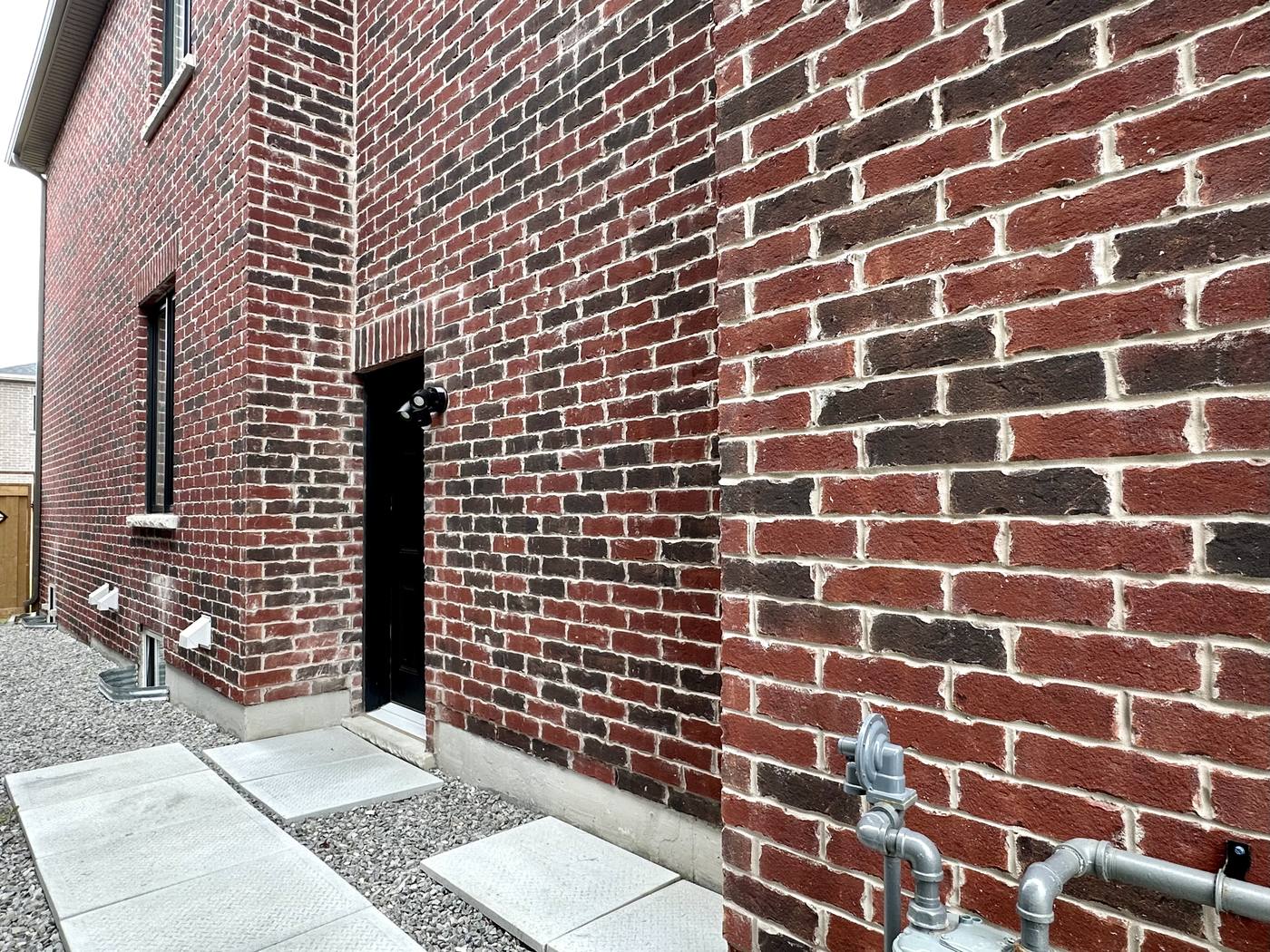
The Building Code doesn’t require a separate entrance, although some zoning by-laws do, including Vaughan’s. The two units can share one means of egress if it’s protected from both, but neither unit can exit through the other. Electrical work needs its own notification of work with the Electrical Safety Authority and an inspection before the walls are closed.
Since Bill 23, municipalities can’t require more than one parking space for an additional unit. Toronto requires none for a secondary suite under By-law 89-2022, and Vaughan requires one per additional unit outside protected transit station areas. In Mississauga, Brampton and Oakville, check the current zoning by-law for the address.
What Are the Four Common Permit and Compliance Situations?
In our experience, a basement apartment for sale usually falls into one of four situations. They aren’t official municipal categories; they’re the framework we use, because each one carries a different price, risk and offer clause.
Situation One: Permitted and Closed
The permit was pulled, the work was inspected and the final inspection passed. In Mississauga, a registered unit appears on the City’s public registry; in Toronto, the closed permit is the evidence. You still need normal due diligence on condition, later alterations, tenancy, insurance and financing.
Situation Two: Permit Open, Final Inspection Not Completed
A permit exists, but the records don’t show a passed final inspection. Buyers rarely think to check for this, which is why it catches people out. Ask the municipality what’s outstanding before you decide how to proceed.
Situation Three: Potentially Lawful Older Suite
A long-standing unit can be lawful in ways a new one wouldn’t be. Buyers who assume “no permit means illegal” walk away from these units, which is sometimes where an informed buyer finds value. The two dates that decide it are covered below.
Situation Four: No Permit Record Found
No building permit record turns up for the suite. That doesn’t automatically mean the unit is illegal or the work is poor: older records can be incomplete, and some permits don’t appear in online searches. Ask the municipality to review its records and confirm whether approvals exist. If the unit needs more approval or work, find out what’s involved, what it may cost and who will pay for it.
Four Common Permit and Compliance Situations
Situation One · Usually Simplest
Permit Closed
Final inspection completed. Still do normal due diligence.
Situation Two · Needs Follow-Up
Permit Open
Final inspection not completed. Confirm what’s outstanding and price the work.
Situation Three · Needs Legal Review
Potentially Lawful Older Suite
May be lawful under older rules. Have your lawyer review it.
Situation Four · Most to Resolve
No Record Found
No permit found. Negotiate, use a holdback, or walk away.
The real risk for any property depends on its records, occupancy, defects and the remedies available, not just its category. Every situation still needs normal buyer due diligence.
Looking at a Home With a Basement Apartment?
We help you work out which of the four situations applies, as early in the deal as the records allow, so the price reflects what you’re buying.
Talk to Us Before You OfferHow Do You Check If a Basement Apartment Is Legal?
It depends on the city. Mississauga and Brampton publish registries you can search yourself, while Toronto, Vaughan and Oakville rely on building permit records.
Legal Basement Apartments in Mississauga
The City publishes a public Second Units Registry List, updated the second week of every month. Second unit registration is free but requires proof of ownership and a building permit signed off by all concerned City inspectors, so a listed address shows the unit was approved and registered. Registration doesn’t confirm changes made since, or ongoing Fire Code compliance, so the usual due diligence still applies. If the address isn’t there, ask for the registration documents and confirm with the City, since the list only updates monthly.
Legal Basement Apartments in Brampton
Brampton publishes an interactive map of registered additional residential units, searchable by address. The City says second units must be registered to be legal, so a missing address is a reason to ask questions. It also says it can’t warrant the map’s accuracy, so ask the seller for the registration and permit documents too.
Legal Basement Apartments in Toronto and Etobicoke
Etobicoke, North York and Scarborough are part of the City of Toronto, so one process covers them all. Toronto has no public registry of secondary suites. It treats one as a building permit for an interior alteration that adds a second dwelling unit inside an existing house.
Start with Toronto Building’s online permit status search. It lists active permits up to 10 years old, so an open suite permit often shows up there, but a closed permit stays visible for only one month after closing. For proof the permit closed, ask the listing Realtor® in writing for the permit number, the final inspection record and the ESA documentation, or request the building records by email. The 2026 fee is $76.98, and the City aims to process requests within 30 business days, so start early.
Legal Basement Apartments in Vaughan
Vaughan requires a building permit for a secondary suite, so ask its Building Standards department for the permit history and whether a final inspection passed.
Vaughan’s zoning changed on March 25, 2025. The amended by-law allows up to two additional units per lot, with one parking space for each outside protected transit station areas. The suite’s entrance must be separate from the main entrance, and a new entrance can’t go on the same wall as the main one. Some properties have site-specific zoning exceptions, so confirm the rules for the address.
Legal Basement Apartments in Oakville
Oakville also requires a building permit to create a second unit. Ask the building department for the permit history and whether a final inspection passed. Oakville’s in-effect zoning permits up to three units on a property with a detached house, but site-specific provisions can apply, so confirm the rules for the address.
Your Home Inspector Won’t Confirm a Legal Basement Apartment
A home inspection is a condition assessment, not a code review or a permit search. Your inspector can tell you the ceiling looks low or a window looks small, but nobody is calling the City on your behalf, so a clean report doesn’t confirm the suite is legal.
How Do You Make a Basement Apartment Legal in Toronto or Mississauga?
Get a building permit, bring the unit up to the Building Code, pass the City and ESA inspections, and close the permit with a final inspection. In Mississauga, you then register the unit. The steps run in this order:
- Measure the ceiling height and the bedroom windows first, since they decide whether the plan works.
- Confirm the zoning for the address, including any entrance and setback rules.
- Have permit drawings prepared by a qualified designer.
- Apply for the building permit and wait for approval before starting work.
- File an ESA notification before any electrical work begins.
- Book inspections as the work progresses, then the final inspection that closes the permit.
- In Mississauga, submit the free second unit registration.
What Fees and Charges Apply?
Permit fees are small next to construction costs. Toronto’s 2026 fee schedule lists $11.53 per square metre for interior alterations, plus $56.33 for each new residential unit in an application.
Ontario says development charges are not collected for a second unit in an existing house, though education development charges may still apply in some municipalities. Mississauga’s Gentle Density Incentive Program rebates building permit fees for second, third and fourth units on permits issued after July 31, 2024, so confirm it’s still accepting applications.
Paying for the Work
Since January 15, 2025, insured mortgage refinancing can fund a secondary suite. You can borrow up to 90% of the home’s value, including the value the suite adds, as long as the as-improved value is under $2 million, with amortization up to 30 years. It’s limited to homeowners adding self-contained units to their existing home, up to four units in total, and the new units can’t be used as short-term rentals. The additional financing can’t exceed the cost of the project, and you still have to meet the mortgage insurer’s and lender’s requirements, including occupancy. Our article on mortgage financing for Ontario homebuyers explains how qualifying works.
Which Two Dates Govern an Older Legal Basement Apartment?
July 14, 1994 decides which fire safety standard applies to an older suite, and November 16, 1995 decides whether it carries grandfathered zoning status. They’re separate tests, so keep them apart when you assess an older house.
Remember
July 14, 1994 = which Fire Code standard applies
November 16, 1995 = whether zoning is grandfathered
Neither date removes the need for a building permit where one was required. If the house predates either date, that is a question for your lawyer, not an assumption to make from the listing.
July 14, 1994: Which Fire Standard Applies
Section 9.8 of the Ontario Fire Code sets retrofit standards for fire separations, means of escape and smoke alarms in two-unit houses that existed on July 14, 1994. It matters for older two-unit houses in Scarborough, North York and Cooksville. Toronto Fire Services applies it where one suite sits above another, or where two suites sit side by side and share an interior means of escape.
A suite must meet the Building Code in force when the work was done, while the Fire Code applies to existing buildings retroactively. That’s why a pre-1994 suite can be lawful without matching what today’s Code demands of a new one. Ask the seller for any Fire Code inspection records for the unit.
November 16, 1995: Whether Zoning Grandfathers It
Provincial legislation in 1994 required municipalities to permit two-unit houses. Bill 20, the Land Use Planning and Protection Act, repealed those provisions in 1996 but kept them for houses that contained two residential units on November 16, 1995, and for some units covered by a qualifying building permit by that date.
A suite in place before that date may hold legal non-conforming status even where zoning later changed, as with some older two-unit houses in Malton, Applewood and parts of Etobicoke. The date alone doesn’t prove a suite is lawful. Status depends on the facts, including whether the use continued without interruption and what the municipal records show, so have your lawyer assess it. Our article on title search in Ontario explains what your lawyer checks before closing.
Can You Evict the Tenant in a Basement Apartment That Isn’t Legal?
Not simply because the suite isn’t legal. Ontario’s Residential Tenancies Act applies to most private residential rental units, including secondary units such as basement apartments, despite any other Act.
Buy a Situation Four house with a tenant downstairs and you inherit the compliance problem and a protected tenancy together. You can’t simply empty the unit to fix it, and legalization work is rarely something you can schedule around someone living there.
If You Intend to Move In Yourself
Where the house has three or fewer residential units, the seller can serve an N12 notice before closing if you, your spouse, a child or parent of either of you, or a caregiver will live in the unit. The termination date must be at least 60 days away and fall at the end of a rental period or fixed term, and the seller must pay the tenant one month’s rent or offer another acceptable unit. The Landlord and Tenant Board’s guideline confirms that payment applies however much notice is given.
A September 21, 2026 change removed compensation when a landlord gives 120 days’ notice, but it covers only a landlord’s own use, not a notice served for a buyer. An N12 also doesn’t guarantee vacant possession: if the tenant stays, the landlord must apply to the Landlord and Tenant Board, and the tenant can dispute it at a hearing. Bad faith carries serious consequences, so read our article on N12 notices in Ontario and raise this during negotiation, not after closing.
Does the RTA Apply When Family Lives in the Suite?
It depends on the arrangement, not the relationship. Section 5 of the Residential Tenancies Act exempts living accommodation whose occupants must share a bathroom or kitchen with the owner or a close relative who lives in the building: the owner’s spouse, child or parent, or the spouse’s child or parent.
Because the exemption turns on shared facilities, a basement suite with its own kitchen and bathroom generally falls outside it, even when a relative lives there. Whether a tenancy exists at all depends on rent, exclusive possession and the arrangement between you, so have an Ontario real estate lawyer or licensed paralegal assess your situation.
What You Take On as a Landlord
Inheriting a tenancy makes you a landlord from the moment you close. Our complete Ontario leasing guide covers the full picture, and our articles on tenant rights and landlord obligations and how residential leases end in Ontario explain what you can and can’t do once the tenancy is yours.
Will a Lender Count the Rent From a Legal Basement Apartment?
Often, but how much depends on the mortgage insurer, the lender and whether the unit is legal. Settle it before you shop, because it sets your price range.
How Lenders Treat Basement Rental Income
For an owner-occupied two-unit home being financed, CMHC uses an approach of up to 100% of gross rental income; for three or four units, up to 50% of gross rent or a net rental income approach. Lenders apply their own policies on top, so ask your mortgage professional what they’ll need, such as a signed lease, a market rent opinion or proof the suite is legal. If you’re buying mainly as an investment, our article on income properties in Ontario covers financing for rental properties.
Telling Your Insurer Before Closing, Not After
A two-unit home is insured differently from a single-family home, so tell your broker there’s a tenant before closing. Otherwise you’re having that conversation after a claim, which is the worst possible moment.
What Does It Cost to Make a Basement Apartment Legal?
It depends mostly on how much of a suite is already there, so think in three tiers rather than one number.
Tier One: The Suite Is Mostly There
A kitchen and bathroom already exist and the layout works. What remains is fire protection between the units, interconnected alarms, bedroom windows and the ESA inspection. This is the least expensive path because the layout isn’t changing.
Tier Two: Windows or an Entrance Need Cutting
Everything in tier one, plus cutting the foundation wall for larger bedroom windows or a new exterior door, with window wells, drainage and structural work. A new entrance is often the single largest line item, and buyers underestimate it when a finished basement makes the hard part look done.
Tier Three: Building a Legal Basement Apartment From Nothing
Building a legal basement apartment from an unfinished basement can involve substantial costs. In our own Vaughan home, the original quote for our two-bedroom, two-bathroom apartment was approximately $80,000. Our final cost was closer to $120,000 after additional expenses, including engineering, design and appliances. Costs vary by property, scope of work, contractor and materials.
What a Missing Permit Leaves Unknown
A missing permit record doesn’t prove the work is poor. It means there’s no approval on file to show what was built and inspected, so you need more records or a qualified inspection to know. Potential concerns include bedroom windows too small to escape through, no fire protection in the ceiling, alarms that aren’t interconnected, and electrical work with no ESA inspection. Ask about the ceiling height, the bedroom windows, the ceiling assembly and the electrical permits, in that order.
What Do You Do in Situation Two or Situation Four?
An open permit or no record at all doesn’t automatically mean walking away. You have three ways to structure the deal, and they carry very different risk.
Option One: Reduce the Price
You take the property as it is, at a price that reflects the cost to bring it to a closed permit, and the problem becomes yours on closing day. Renovation estimates are estimates, though, so if the scope grows once the walls open, you absorb the overage.
Option Two: A Holdback on Closing
Part of the price stays with a lawyer until the work is finished or the permit closes, which gives the seller a reason to cooperate after closing. Holdbacks need careful drafting and agreement between both lawyers, so raise it early. Our article on closing day in the GTA covers what your lawyer handles at that stage.
Option Three: The Seller Legalizes Before Closing
It’s the cleanest outcome in theory and the hardest in practice. Permit review and inspections take weeks, and a sitting tenant may make the work impossible, so reserve it for small jobs, such as an open permit that only needs a final inspection.
And sometimes you walk. An occupied, unpermitted, post-1994 suite combines a protected tenancy with construction you can’t easily schedule, and occasionally that’s worth declining.
Our Experience Building and Selling a Home With a Legal Basement Apartment in Vaughan
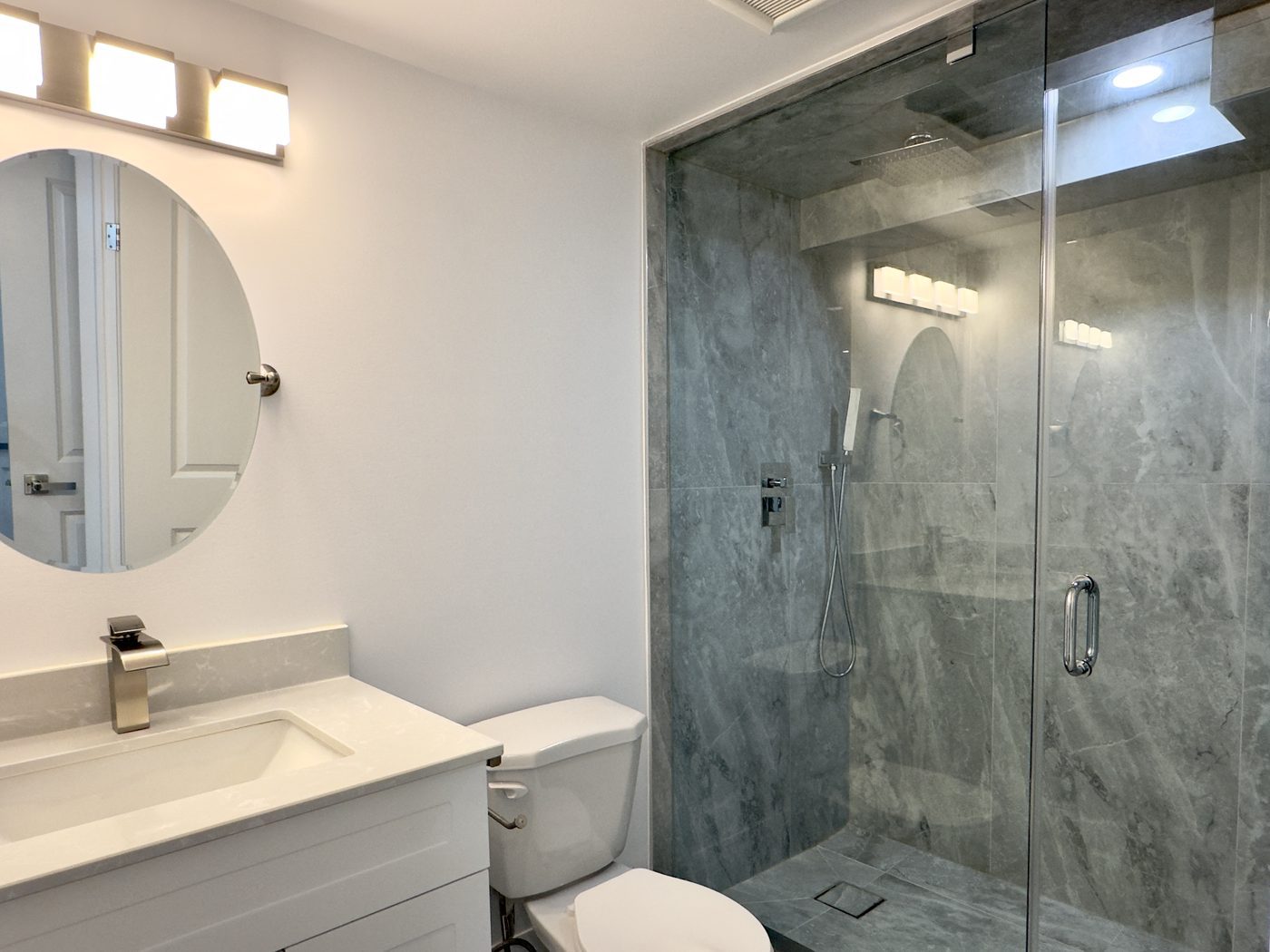
In 2024, we added a legal two-bedroom, two-bathroom basement apartment to our own home in Vaughan. We hired licensed contractors, and our original quote was approximately $80,000. By the time the project was completed, our total investment was closer to $120,000, including additional costs for engineering, design and appliances.
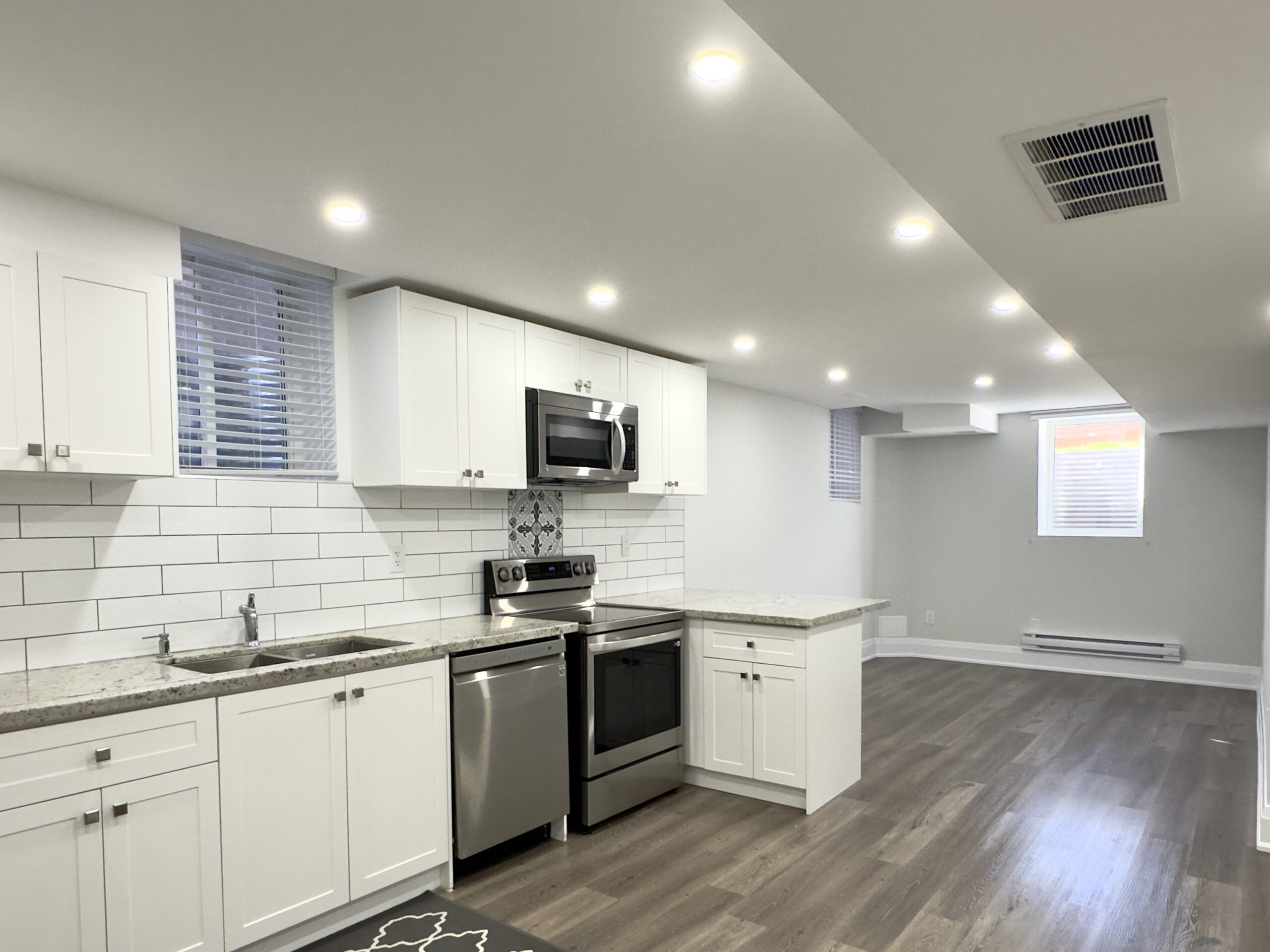
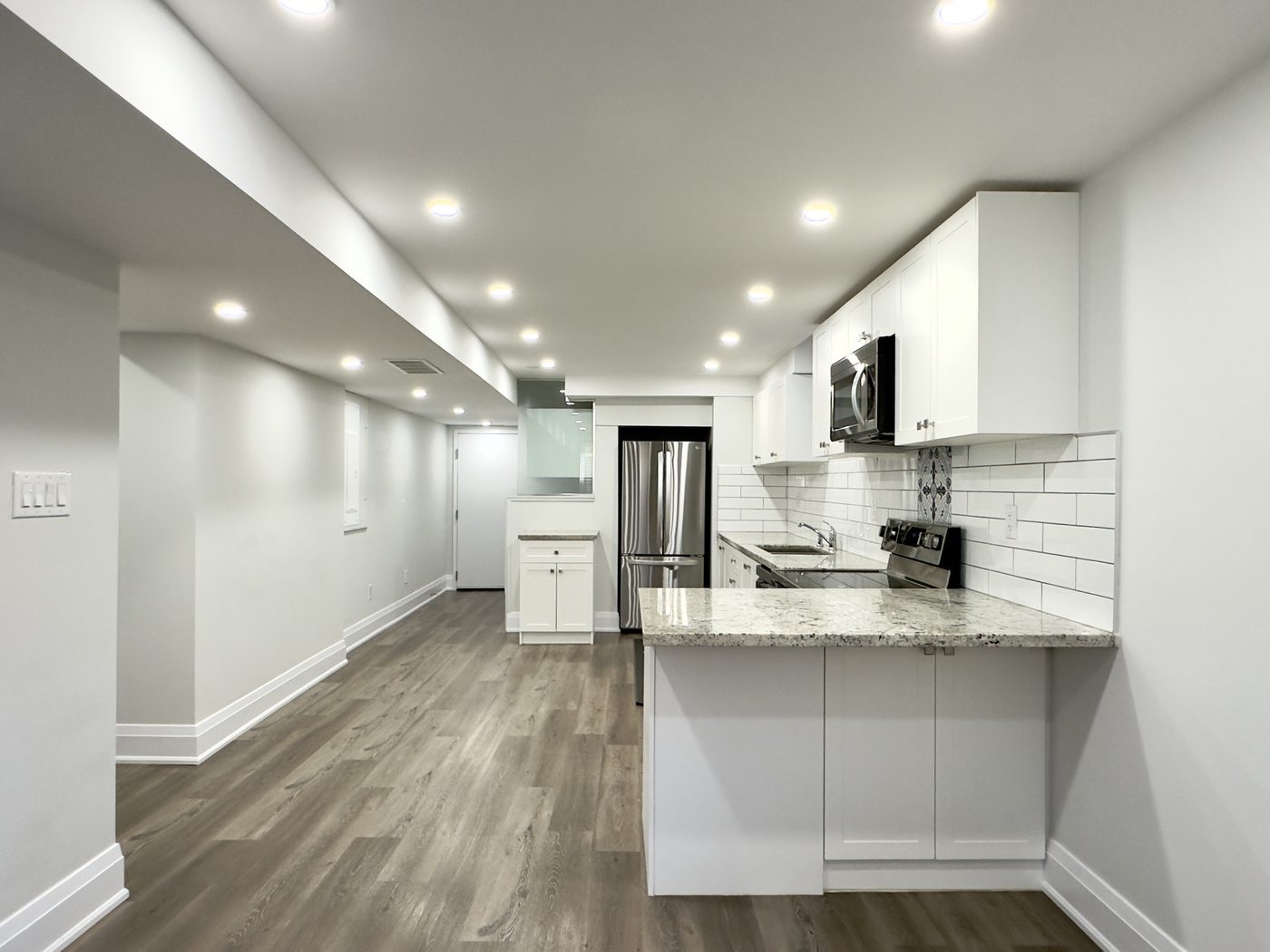
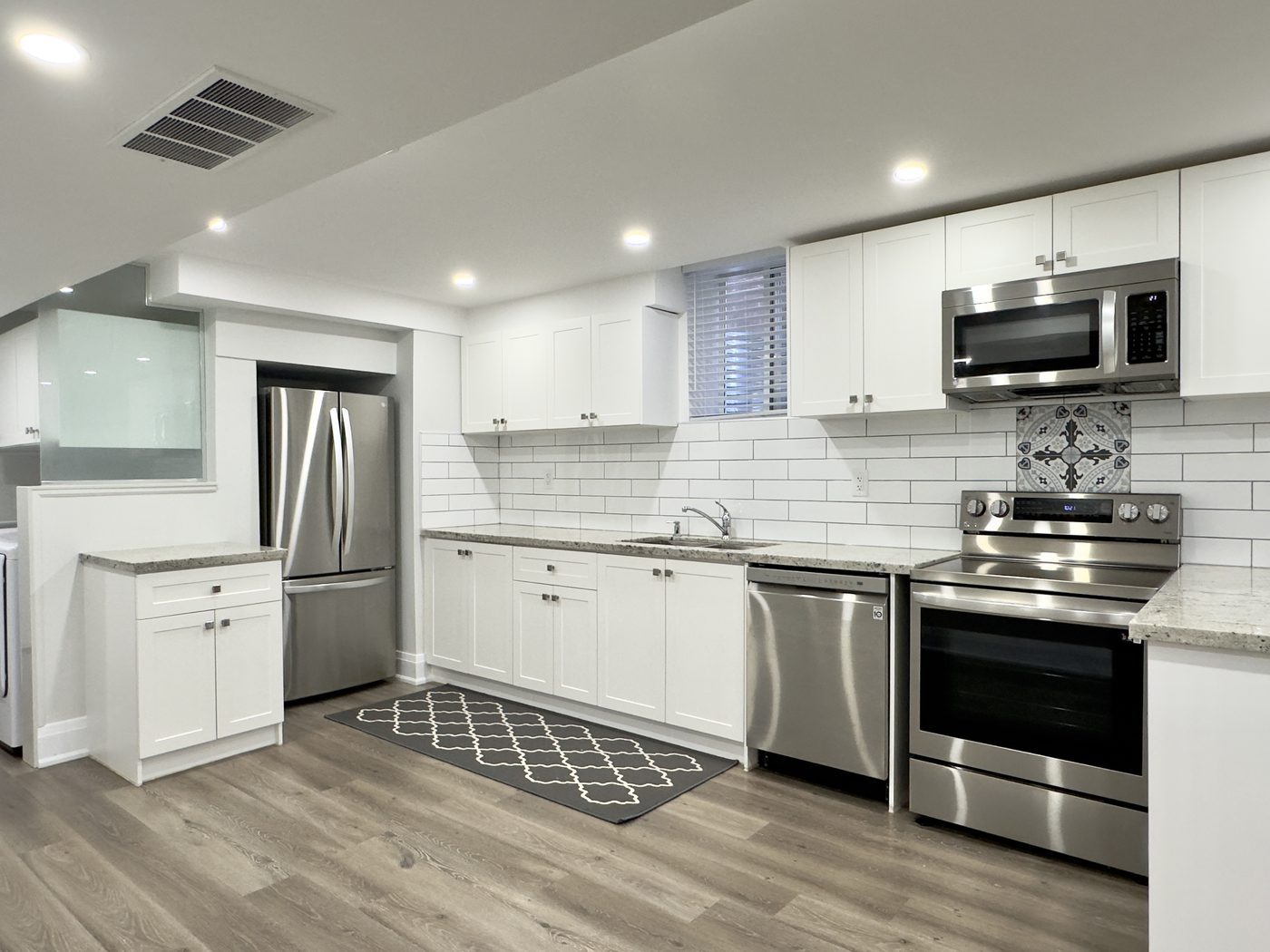
The experience taught us how important it is to budget beyond the initial contractor’s quote. Even with experienced contractors, additional expenses can increase the final cost considerably. The photographs throughout this article show the basement apartment we built.
When we decided to sell our home in 2025, the real estate market had begun to slow. Other properties in our neighbourhood were taking longer to sell, but our home sold in less than two weeks.
We believe the legal basement apartment was a significant selling feature. With two bedrooms and two bathrooms, it offered flexibility for extended family living or potential rental income.
Our experience reinforced an important lesson we now share with buyers and homeowners: a properly approved basement apartment can make a property more appealing, but construction costs must be carefully considered. The money invested does not automatically translate into an equivalent increase in resale value.
What Goes in Your Offer on a House With a Basement Apartment?
Protect yourself with a condition in the purchase agreement, where it gives you a way out and a reason to renegotiate. Verbal assurances give you neither.
Ask for the permit number and final inspection record before you offer, and run the Mississauga registry or Toronto’s online permit search yourself. Then, with your real estate lawyer, include a condition on your satisfactory review of the municipal records, with enough days to hear back. A Toronto records request can take up to 30 business days, so the paperwork you collect before the offer matters most.
Ask the seller to warrant the status of the unit inside the agreement rather than in an email, and have your lawyer confirm the warranty survives closing. Your lawyer drafts the warranty and advises on whether it survives closing and what remedy you’d realistically have if the suite turns out to be unpermitted after possession. Our article on winning offers in the GTA covers when conditions are realistic, and our GTA vs Niagara home prices page has current market conditions.
Your Verification Checklist
- Mississauga: confirm the address on the Second Units Registry List
- Brampton: confirm the address on the registered units map
- Toronto: run the address through the online permit status search for open permits
- Toronto: get the permit number and written proof the final inspection passed
- Vaughan and Oakville: ask the building department for the permit history
- Vaughan: confirm the suite has one parking space and a separate entrance
- All cities: ask whether the suite predates July 14, 1994 or November 16, 1995
- All cities: request the Electrical Safety Authority documentation
- If a tenant is in place: get the lease, the rent and the tenancy start date
- Before closing: tell your insurance broker about the tenant
Legal Basement Apartments: Your Questions Answered
Does Toronto have a registry of legal basement apartments?
No. Toronto doesn’t publish a registry of secondary suites, so you check building permit records instead. The City’s online permit search shows active permits up to 10 years old, and for proof a permit closed you can ask the seller for the final inspection record or request the building records from Toronto Building.
What is the minimum ceiling height for a legal basement apartment in Ontario?
Under the 2024 Ontario Building Code, a new or newly legalized suite needs a ceiling height of at least 1.95 m, with at least 1.85 m clear under beams and ducts. The Part 11 alternatives for older houses don’t lower it, so measure before planning anything else.
How much does it cost to make a basement apartment legal in the GTA?
It varies by property, scope of work, contractor and materials. For our own two-bedroom, two-bathroom apartment in Vaughan, the original quote was approximately $80,000, and our final cost was closer to $120,000 after engineering, design and appliances. Upgrading a suite that already has a kitchen and bathroom usually costs less, and development charges aren’t collected for a second unit in an existing house, though education development charges may apply in some municipalities.
Keith & Françoise Real Estate Team
eXp Realty Brokerage · GTA, Hamilton & Niagara Region
Françoise Pollard, Realtor®, licensed since 2006, and Keith Goldson, Broker, licensed since 2016, work with buyers across the Greater Toronto Area, Hamilton and Niagara Region. We’ve also built and legalized a basement suite ourselves, so we know the permit and inspection process as owners as well as advisors. This article is based on the 2024 Ontario Building Code, the Bill 23 Planning Act changes, Section 9.8 of the Ontario Fire Code, Toronto Building’s 2026 fee schedule, and current CMHC rental income guidance. See how we work with buyers in both markets.
Both of us are registered with the Real Estate Council of Ontario (RECO). You can confirm our registration on RECO’s public register.
Know What You’re Buying Before You Sign
We help you check the registry or permit record and work out which of the four situations applies, so you can make an informed decision. Free consultation, no obligation.
Talk to the TeamThis article is current with Ontario legislation, the 2024 Ontario Building Code, and municipal processes and fees as of October 2026. It is general information only and is not legal, financial, mortgage, construction or municipal compliance advice. Building Code figures summarize the Part 9 requirements for new work; existing houses may qualify for Part 11 compliance alternatives, and your municipality’s plans examiner decides what applies. Cost figures come from our own Vaughan project, completed in 2024. Zoning, permit and registration rules differ by municipality and by property. Confirm current requirements with your city’s building department, and have an Ontario real estate lawyer review the municipal file and any existing tenancy before you waive conditions.