

Brampton Community Guide
Brampton.
The Flower City.
Brampton is the most underestimated city in the GTA. People who have never lived here see the traffic on the 410 and write it off. People who know it understand what is actually here: neighbourhoods that have been here for fifty and sixty years, one of the most genuinely diverse communities in the world, and value that has driven buyers across the Mississauga border for decades. Françoise has been watching this city from the inside since 1996. This is what she sees.
Updated: June 2026
By Françoise Pollard, Realtor®, and Keith Goldson, Broker, Keith & Françoise Real Estate Team, eXp Realty Brokerage. Françoise purchased her first home in Brampton in 1996 and began her real estate career here in 2006. We work with buyers across Brampton and the broader GTA every week.

The Short Version
Most people who have not lived in Brampton have the wrong picture of it. Not just a fast-growing suburb. Brampton is a city with genuine depth: Canada’s first satellite city in Bramalea, a downtown with actual civic character, cultural communities that have been building here for forty years, and mature neighbourhoods that take decades to develop. Right now it is also a buyer’s market with a wide range of detached homes, semis, freehold townhouses, condo townhouses, stacked townhouses, and condo apartments across many distinct areas. We have worked with buyers and sellers in Brampton for nearly twenty years.
Brampton Then and Now · A City That Has Transformed
What Draws Buyers to Brampton
The buyers who understand Brampton best are the ones who stop comparing it to Mississauga and start looking at it on its own terms. Yes, detached homes here are priced below comparable properties in Mississauga. Yes, highway access and GO transit are strong. But those are the surface reasons. Ultimately, the deeper reason buyers keep coming is that Brampton has built something most GTA suburbs have not: a city with real character, real community infrastructure, and real neighbourhood identity across its different areas.
Françoise bought her first home here in 1996 specifically because the same builder was selling the same semi-detached model for less in Brampton than in Mississauga. The difference was property tax rates. That gap existed for decades and drove a generation of first-time buyers across the Mississauga border. It is worth noting honestly that this affordability advantage has narrowed considerably in recent years as Brampton itself has grown and prices have risen. The gap is still real but it is smaller than it was in the 1990s and 2000s. First-time buyers today still find better value in Brampton than in Mississauga, but the difference is no longer as dramatic as it once was.
The city is also one of the most culturally diverse in Canada, with a South Asian majority community and a significant Black population that together have built genuine neighbourhood infrastructure: houses of worship, cultural grocery stores, restaurants, and community organizations that are not found in newer subdivisions elsewhere in the GTA.
What Brampton Feels Like
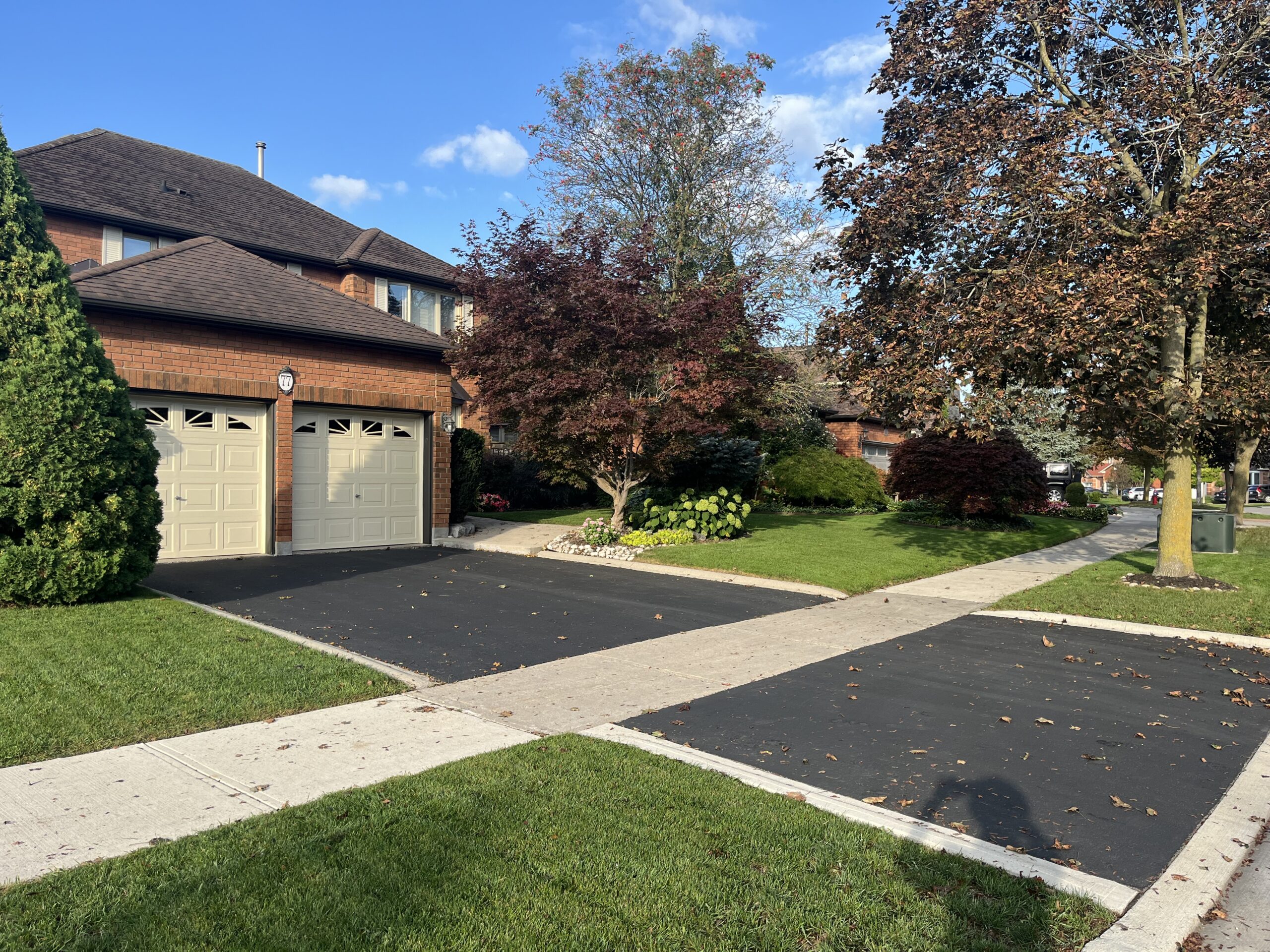
The first thing that surprises buyers who have only driven through Brampton on the 410 is the older neighbourhoods. They expected subdivision sameness and found mature trees, well-maintained parks, and streets with decades of character built into them. Bramalea has been here since the 1960s. Downtown Brampton was incorporated as a village in 1853 and founded even earlier, around 1830. That is close to two hundred years of history in the heart of a city that most people associate only with recent growth. Downtown Brampton has genuine historic bones that most GTA cities built after the 1980s simply do not have: the Rose Theatre, Garden Square, and Gage Park give the city a civic identity that Mississauga, with all its advantages, still cannot match.
Downtown and the Cultural Corridor
The Queen Street Corridor from downtown westward is the city’s main cultural spine. Garden Square hosts free festivals, concerts, and events year-round. Gage Park’s skating trail winds through mature trees in the heart of downtown and is free to skate. The Brampton Farmers Market runs every Saturday from June to October along Main Street in downtown Brampton. The Peel Art Gallery, Museum and Archives on Queen Street is worth knowing about as a genuine cultural anchor in a city that is often described primarily through its growth statistics.
Brampton has expanded significantly northward and westward in recent decades. The city now stretches right up to Mayfield Road, which marks the boundary with Caledon to the north. The newer communities include Northwest Brampton and Sandringham-Wellington North near that boundary, and Toronto Gore Rural Estate in the northeast, which is a lower-density estate community bordering Caledon and Vaughan with larger lots than typical Brampton subdivisions. Mount Pleasant and Credit Valley, once considered newer communities, are now established neighbourhoods in their own right.
Many Brampton families who want more space have pushed steadily north and crossed Mayfield Road into Caledon. Caledon has developed substantially, with communities like Southfields Village attracting buyers who want that extra space without losing easy access to Brampton amenities and Highway 410. Françoise and Keith lived in Southfields Village after leaving Brampton and know both sides of that boundary from personal experience.
The Newer Communities
The genuinely newer communities of Northwest Brampton and Sandringham-Wellington North have a different character from the established areas. They are newer builds, higher density in places, and more suburban in feel. They suit buyers who want newer construction with less inspection risk and good school infrastructure, but they do not yet have the mature neighbourhood feel of Bramalea or the older central areas.
What to Expect When Buying in Brampton
In practice, the housing mix in Brampton reflects everything else about the city: more varied, more layered, and more interesting than buyers expect. What surprises most people is how much quiet, established residential character still exists alongside the growth. There are streets in central and east Brampton with large mature trees, well-maintained older homes, and a neighbourhood feel that takes decades to develop. These areas are a genuine alternative for buyers who do not want a brand-new subdivision. At the other end of the spectrum, pre-construction opportunities exist in the remaining undeveloped parcels in the north and west of the city, particularly near the Mayfield Road boundary.
The full housing range runs from 1960s Bramalea bungalows through to pre-construction detached homes in northwest Brampton. Depending on your budget and target neighbourhood, you will encounter detached homes, semi-detached homes, townhouses, and stacked townhouses at significantly different price points. The city’s rapid growth means you can find a 1970s Bramalea bungalow and a newer Credit Valley detached home within a few kilometres of each other.
Freehold Townhouses
Freehold townhouses are one of the most popular entry points into the Brampton market for first-time buyers. Buyers own their unit and lot outright with no condo fees, no status certificate, and no condo corporation to answer to. They offer more space than a condo apartment at a price point below detached, which makes them the natural next step for buyers who are stretching to get into the market. Freehold townhouses are found across most Brampton communities, with strong concentrations in Credit Valley, Fletcher’s Meadow, Mount Pleasant, and the newer northwest Brampton communities.
Condo Townhouses
Condo townhouses look and feel like freehold townhouses from the outside but carry condo status, meaning buyers own their unit while the condo corporation manages and maintains common elements such as driveways, landscaping, and exterior upkeep. Monthly condo fees cover those costs. For guidance on reviewing a condo purchase, see our Ontario buyers guide. For buyers who want the feel of a house without the full maintenance responsibility, condo townhouses are a practical option. They are particularly popular with downsizers who are moving out of a detached home and want reduced upkeep without moving to a high-rise building. Condo townhouses are found across Brampton but are particularly concentrated in established areas like Bramalea, Westgate, and parts of central Brampton.
Stacked Townhouses
Stacked townhouses are vertically arranged units where two townhomes are stacked on top of each other within a larger building. They carry condo status and typically come in at lower price points than traditional townhouses, making them one of the most accessible ownership options in the city. They are concentrated in the newer northwest Brampton communities near the Mount Pleasant GO station and in parts of Bramalea. The trade-off for the lower price is shared walls above and below rather than side to side, less private outdoor space.
Condo Apartments
Condo apartments represent the most accessible entry point for buyers who cannot yet reach townhouse or detached pricing. They are concentrated in several distinct corridors: downtown Brampton along the Queen Street and Main Street corridor, the Steeles Avenue and Hurontario corridor near Shoppers World, and the Bramalea area around Brampton City Centre on and around Lisa Street.
Beyond those established corridors, Westgate within Bramalea has existing condo towers, and the Gore Road and Queen Street East area in northeast Brampton is emerging as a newer development location. Northwest Brampton around Creditview Road and Bovaird Drive West near the Mount Pleasant GO station is a growing transit-oriented corridor with multiple developments built or underway. That northwest location suits buyers who want newer construction with GO train access at prices below the downtown and Steeles corridors.
The W23 and W24 legacy
Experienced Realtor®s and longtime Brampton buyers will remember the old TREB district labels: W23 covering west and central Brampton including Downtown, Fletcher’s Creek, Northwood Park, Credit Valley, and Brampton West; W24 covering east and northeast Brampton including Bramalea, Heart Lake, Sandringham-Wellington, Springdale, Castlemore, and Bram East. These labels are no longer used in listings but they still describe a meaningful geographic and character divide. West of Highway 410 tends to be older stock with more established neighbourhood character. East of 410 is where Bramalea and Springdale sit: both established communities with their own distinct character. Springdale in particular is an older established neighbourhood, not a newer development despite its location in the northeast.
Inspection realities
Bramalea-era homes from the 1960s and 1970s carry the standard inspection considerations for that era: aging electrical, older plumbing, and in some cases foundation settling. The G&H Section in Bramalea has a unique layout where homes were placed close to the front, back, or side of lots rather than centred, which affects lot use and resale perception. Newer builds from the 2000s onward carry typical builder warranty considerations but watch for tarion coverage timelines. Get an inspection on every offer. The current market gives you the room to include that condition on almost every property.
How the Brampton Market Behaves
The buyers who write Brampton off on first impression are the same buyers who miss the opportunity. Buying in Brampton right now means entering a buyer’s market with prices below their 2022 peak and meaningful negotiating room across most property types. First-time buyers targeting townhomes are finding realistic entry points, and detached homes at the lower end of the market are accessible in a way they were not during the 2021 to 2022 peak. Inventory is elevated and days on market are longer than buyers experienced two years ago, which means proper due diligence is possible on almost every offer.
Consequently, buyers who were priced out two years ago are finding genuine opportunities now. Multiple offer situations still occur on well-priced properties but they are no longer the default experience. For patient buyers who take their time and do their homework, this is a favourable window for buying in Brampton.
For current verified figures, check TRREB Market Watch monthly. In addition, market conditions change and the figures that matter most are the comparable sales on the specific streets you are considering. We share those with every buyer before any offer.
Getting Around When Buying in Brampton
GO Transit
One of the things that consistently surprises buyers who have not researched Brampton carefully is how well-connected it is. Brampton is served by three GO Transit stations on the Kitchener Line: Brampton GO in the downtown core, Bramalea GO in east Brampton, and Mount Pleasant GO in northwest Brampton. These stations provide convenient commuter rail service to Union Station in downtown Toronto and connections to communities across the Greater Golden Horseshoe. For buyers who commute to Toronto, GO train access is a genuine advantage here compared to many Niagara communities. Brampton Transit also provides local bus service across the city and connects to Mississauga MiWay and TTC.
Driving
In terms of driving, Highway 410 runs north-south through the city. Highway 407 provides east-west access with connections to the 401 and 427. Highway 10 (Hurontario Street) connects Brampton directly to Mississauga. Traffic on major corridors is significant during peak hours, particularly on Bovaird Drive, Steeles Avenue, and Highway 410 approaches.
“I bought my first home in Brampton in 1996 because the same builder was selling the same semi for less than in Mississauga. The city has changed completely since then. But the logic of crossing that border for better value has never entirely gone away.”
Françoise Pollard, Realtor® · Keith & Françoise Real Estate TeamFrançoise bought her first home on Pressed Brick Drive in W23 in 1996. She and Keith actually met in Brampton, at Canadian Body Works Fitness, a gym that is no longer there. After that they bought together in W24 near Brampton City Centre, where they lived for five years. Her real estate career started at Sutton Group on West Drive in 2006, and she learned every street in this city the way Realtor®s learned them before GPS: with a Perly’s map book on the passenger seat and eventually a TomTom when technology caught up. There is no substitute for that kind of knowledge.
We work with buyers in Brampton. We can show you what the street looks like at different times of day, which blocks hold value, and which inspection findings are typical versus genuinely concerning for homes in each part of the city.
Schools and Education
A fast-growing city needs a fast-growing school system, and Brampton has one. Two school boards serve buyers in Brampton. The Peel District School Board operates public schools throughout the city, serving over 148,000 students across 262 schools in Peel Region. The Dufferin-Peel Catholic District School Board operates the separate Catholic school system with over 70,000 students across 152 schools in Mississauga, Brampton, Caledon, and Orangeville. Both boards continue opening new schools as the city grows.
However, school quality and catchment boundaries vary significantly by neighbourhood. Buyers with children should verify the catchment for any specific property before making an offer, as boundaries shift when new schools open in growing areas. This is one of the most important steps when buying in Brampton and we always verify it with every client.
Healthcare
A city of 800,000 people needs serious healthcare infrastructure and Brampton has it. Brampton Civic Hospital at 2100 Bovaird Drive East is the city’s main hospital, part of the William Osler Health System. Opened in 2007, this 608-bed facility ranks among the busiest hospitals in Ontario with one of the highest emergency department volumes in the province. Services include one of the largest labour and delivery programs in Ontario, cancer care, cardiac care, critical care, dialysis, and mental health programs. Additionally, the hospital is affiliated with McMaster University’s medical school for physician training.
Peel Memorial Centre for Integrated Health and Wellness at 20 Lynch Street in central Brampton opened in 2017. It provides a 24/7 urgent care centre staffed by emergency-trained physicians, day surgery, diagnostic imaging, and a range of outpatient programs. Importantly, Peel Memorial is not a full emergency department. Patients with serious or life-threatening conditions should go directly to Brampton Civic Hospital.
Meanwhile, finding a family doctor accepting new patients is a challenge in Brampton as it is across Ontario. The city’s rapid population growth has outpaced family medicine capacity. Walk-in clinics are widely available across the city. It is worth factoring this in when buying in Brampton if you do not yet have a family doctor.
Daily Life in Brampton
What makes Brampton genuinely different from any other GTA suburb is not a statistic. It is what you experience when you spend time here. The South Asian community has built a cultural infrastructure in this city that is unlike anything else in the GTA: gurdwaras, temples, grocery stores, restaurants, and community organizations that have been here for decades and continue to grow. Walking along Hurontario Street or through the Bramalea corridors on any given day tells you more about this city than any census figure could.
Communities With Deep Roots
The Caribbean community has deep roots in Brampton that go back generations. Jamaica, Guyana, and Trinidad and Tobago are among the top countries of birth for Brampton’s immigrant population, and that heritage is woven into the city’s food, music, faith communities, and neighbourhood character in ways that are visible and genuine. This is not a community that arrived recently. It has been shaping Brampton for forty years.
In addition, English, Irish, Scottish, and broader European heritage is part of Brampton’s story too. The older established neighbourhoods of downtown Brampton, central Bramalea, and the established west-end streets reflect generations of residents who built the city’s foundational residential character. Those streets with mature trees, established gardens, and neighbours who have known each other for twenty or thirty years did not happen by accident. They were built by people who put down roots and stayed.
Notably, a significant portion of Brampton’s residents were born in Canada, including second and third generation residents across every community. Brampton is not simply a city of newcomers. It is a city where people have grown up, gone to school, started businesses, raised families, and chosen to stay. That generational depth is part of what gives certain neighbourhoods their character, and it is something buyers who have never spent time here often do not expect to find.
Parks and outdoor space
Chinguacousy Park on Bramalea Road is one of the largest municipal parks in Peel Region, with a skating ribbon in winter, a splash pad in summer, a ski hill, and year-round programming. Heart Lake Conservation Area in northeast Brampton offers swimming, fishing, hiking trails, and camping within the city limits. Gage Park in downtown Brampton has a beloved free outdoor skating trail that winds through the park’s mature trees and has been drawing families from across the city for decades. Garden Square hosts free outdoor concerts and events throughout the year. The trail network connecting many of these green spaces continues to expand as the city grows.
Grocery and retail
In terms of daily shopping, all major grocery chains are represented in Brampton. South Asian grocery stores along Hurontario and Dixie offer produce, spices, and specialty items at prices significantly below chain stores. Bramalea City Centre and Shoppers World Brampton are the two main enclosed malls. The Brampton Farmers Market runs every Saturday from June to October along Main Street in downtown Brampton.
What About Crime in Brampton?
This is the question every serious buyer eventually asks, and it deserves a serious answer rather than a dismissal or a reassurance. After twenty years of working in Brampton, here is what I actually think.
Population growth changes the numbers
When I started in real estate in Brampton the population was around 500,000. Today the city is approaching 800,000 residents. More people means more traffic collisions, more thefts, more police calls, and more reported incidents. The raw number of incidents increases simply because there are more people. The more useful measure is the crime rate per capita, not the total count. Brampton’s demographics also matter here: the city has a relatively young population, significant immigration, rapid housing development, intense population density, and substantial commercial growth. All of those factors affect policing demands. That is sociology, not politics.
Instant communication changes awareness
In the 1990s you watched the evening news and read the paper. Today instant communication means residents are aware of incidents that might have gone largely unnoticed thirty years ago. A single car theft reaches thousands of neighbours within minutes through Facebook groups, WhatsApp chains, and community apps. That is a genuine shift in how information travels. Awareness of incidents and the actual frequency of incidents are two different things, and it is worth keeping that distinction in mind.
Some increases were real and should not be dismissed
Peel Region experienced significant increases in auto theft, home invasions, and organized crime activity including extortion targeting specific business communities. These were not imagined and they became major policing priorities. It is important to distinguish between targeted organized crime, which affects specific individuals and industries, and random violence affecting ordinary residents. Those are very different risks and many buyers conflate them. At the same time, recent Peel data show measurable improvements in several of those categories following targeted enforcement. The situation is not static.
What the data actually show
One fact that surprises many buyers: Peel Region’s crime rates are often below provincial and national averages for several categories. The City of Brampton itself notes that criminal code violation rates remain below Canadian and Ontario averages. That does not mean there is no crime. It means the perception and the statistical reality are not always the same thing.
Reputation lag is real
Cities develop reputations that can persist for decades regardless of what the current data shows. Scarborough, Hamilton, Oshawa, and North York have all carried reputations that took years to catch up with the reality on the ground. Brampton may be experiencing something similar. People often base opinions on stories they heard years ago rather than on recent data. That is worth factoring in when you read coverage of Brampton, and it is worth asking whether the perception matches what you actually see when you walk a specific street.
The only conversation worth having
I would never tell a client that Brampton is safe or that Brampton is unsafe. Neither statement means anything useful. Crime perception is also highly personal. Some buyers worry about auto theft. Others worry about walking at night. Others care primarily about schools, community involvement, parks, or property upkeep. Crime is only one piece of the picture and it is rarely the most important one.
My rule after twenty years has not changed: buy the street first, then the neighbourhood, then the city. I have seen million-dollar streets in Brampton I would recommend without hesitation. I have also seen pockets in highly regarded GTA communities I would not. The city name on the listing tells you very little. The specific street tells you almost everything. That is the conversation I have with every buyer, and it is the only one that actually helps.
Who Brampton Is Best Suited For
After twenty years of buying in Brampton with clients, the pattern is consistent. The buyers who thrive here are the ones who looked past the surface and made the decision on what the city actually is. The buyers who regret it are the ones who expected something it was never going to be.
Works well for
First-time buyers who want real ownership of a detached or semi-detached home and cannot make the Mississauga numbers work. Families who need school infrastructure, community centres, parks, and neighbours rather than a subdivision that is still being built. New Canadians who want to live inside established cultural communities with the grocery stores, places of worship, and social fabric already in place. Commuters who need reliable GO train access to Toronto without absorbing Mississauga pricing. And Brampton homeowners with equity who are ready to right-size. If that last one is you, our Ontario downsizing guide is the place to start.
Harder for
Buyers who want quiet. Brampton is a large, fast-moving city and it feels like one at almost every hour. Buyers who come from older Toronto neighbourhoods expecting mature street character, independent retail, and walkable daily life will find most of Brampton genuinely disappointing outside a few central Bramalea and downtown pockets. Buyers who are primarily motivated by leaving the GTA entirely rather than finding value within it should be honest with themselves about what they actually want. If what you want is lake access, a slower pace, and a genuine lifestyle change, read our St. Catharines community guide before making any decision about Brampton.
Neighbourhoods to Consider When Buying in Brampton
The neighbourhoods are one of the best-kept secrets of buying in Brampton. Each area has a distinct character that most buyers only discover after they have moved in. These are the areas we work in most frequently and what we have learned about each one from twenty years of showing them.
Bramalea
Bramalea is Canada’s first satellite city, developed from the 1960s onward east of Highway 410. It has a distinct character and layout that surprises buyers who expect standard GTA suburban streets. The G&H Section within Bramalea is particularly notable: homes were deliberately placed close to the front, back, or side of lots rather than centred, creating a denser street feel that was unconventional at the time. As a result, these homes remain very affordable relative to the rest of the GTA and attract first-time buyers and investors consistently. Bramalea City Centre is the main retail anchor. Bramalea GO station provides direct service to Toronto Union Station on the Kitchener line.
Best forFirst-time buyers and value-focused buyers who want established neighbourhood character and GO train access at lower price points than west Brampton.
Search Brampton Listings →Mount Pleasant
Mount Pleasant was still farmland when Françoise bought her first home in Brampton in 1996. Developed in the 2000s as one of Brampton’s most intentionally designed communities, it was built around a walkable village core, Village Square, and the Mount Pleasant GO station which opened in 2005, though the residential community around it continued developing through the late 2000s and into the 2010s. The neighbourhood is now well established with a mix of detached homes, semis, and townhouses. Its proximity to the GO station continues to make it popular with buyers who commute to Toronto.
Best forCommuters who need GO train access and buyers who want newer construction with walkable amenities nearby.
Search Brampton Listings →Westgate
Westgate sits within the broader Bramalea community and includes the L Section, which offers detached homes, semi-detached, townhouses, and condos in a mature setting with significant tree cover. The streets here follow the Bramalea naming convention where all street names in a section start with the same letter, which gives the neighbourhood a distinct identity. Bramalea Woods is a genuine highlight: a preserved natural space with parks, forest, a lake, walking trails, and wildlife within a residential neighbourhood. Most buyers looking at Bramalea never find it until they are shown it. It is the kind of amenity that changes an offer decision once a buyer walks it.
Best forBuyers who want a mature community with natural green space access and diverse housing types at practical price points.
Search Brampton Listings →Credit Valley & Fletcher’s Meadow
Credit Valley and Fletcher’s Meadow are established west-Brampton communities that developed through the 2000s in what was still partially undeveloped W23 territory when Françoise bought her first home in 1996. Credit Valley sits adjacent to the Credit River corridor and attracts buyers who want larger detached homes on proper lots, typically families moving up from semis or townhomes and willing to pay a modest premium over comparable east-Brampton properties for the quieter western character. Fletcher’s Meadow built around the Cassie Campbell Community Centre which functions as a genuine neighbourhood anchor with ice, pool, and fitness facilities. Both areas have strong school infrastructure and are disproportionately popular with buyers relocating from Mississauga who want to stay close to the Highway 410 corridor.
Best forFamilies looking for newer detached homes with good community infrastructure at prices below comparable Mississauga properties.
Search Brampton Listings →Downtown Brampton
Downtown Brampton has genuine historic character that distinguishes it from the newer suburban communities surrounding it. Queen Street and Main Street carry heritage buildings, the Rose Theatre, Garden Square, and the kind of civic infrastructure that most GTA suburbs never develop. The Brampton GO station sits steps away, making this one of the most transit-accessible addresses in the city. Keith and Françoise lived here when they moved to W24, within walking distance of Brampton City Centre and the Sutton Group office on West Drive where Françoise started her career.
Streets directly north and west of the GO station offer older detached homes priced on age and condition rather than location, which creates genuine opportunity for buyers willing to renovate. Meanwhile, condo apartment development has increased downtown in recent years, adding mid-rise buildings to a market long dominated by older detached and semi-detached ownership properties.
Best forBuyers who want walkability, transit access, and genuine urban character rather than a purely suburban experience. Also suits buyers looking at condos or older detached homes at competitive prices.
Search Brampton Listings →Thinking About More Space?
Many Brampton buyers eventually look north to Caledon as the next step. Françoise and Keith lived in Southfields Village in Caledon after leaving Brampton. If you want more land, more space, and the character of a smaller community while staying close to the 410, our Caledon community guide covers what that move looks like.
Browse all active Brampton listings updated daily from MLS.
Search Brampton Listings →Keep Reading
Work With Someone Who Knows Every Street
Françoise started buying in Brampton in 1996 and worked here as a Realtor® from 2006. We have been working with buyers buying in Brampton for nearly twenty years and can show you what comparable sales actually look like before you make an offer.
Françoise Pollard, Realtor® · Keith Goldson, Broker · Keith & Françoise Real Estate Team, eXp Realty · 416-451-2592
Frequently Asked Questions
Yes, for the right buyer. Brampton is currently a buyer’s market with increased negotiating room and inventory levels well above the long-run average. First-time buyers and families are finding genuine opportunities, particularly in townhomes and entry-level detached homes. The city’s population growth and infrastructure investment support long-term demand.
Brampton home prices vary significantly by property type and neighbourhood. Detached homes carry a premium over semis and townhomes. Because the market shifts monthly, check TRREB Market Watch for current figures and ask us for comparable sales on any specific street before making an offer.
The G&H Section in Bramalea consistently offers the most affordable detached and semi-detached homes in the city. Westgate and parts of older central Brampton also offer value. For buyers who want newer construction at accessible price points, Fletcher’s Meadow, Sandringham-Wellington North, and the northwest Brampton communities are worth considering.
Yes. Brampton GO station (downtown), Bramalea GO station, and Mount Pleasant GO station all provide service to Toronto Union Station on the Kitchener line with regular weekday peak-period service. This makes Brampton one of the better-connected GTA suburbs for Toronto commuters.
Historically the main driver has been property tax rates. The same builder-constructed home has typically sold for less in Brampton than in Mississauga partly because of the difference in municipal tax rates. Brampton also has a different perception than Mississauga among some buyers, which affects pricing. For buyers focused on value and not brand perception, this gap has consistently represented an opportunity.
Explore Other Communities
This guide is for general informational purposes only and reflects conditions as of June 2026. Market conditions referenced from TRREB Market Watch. Population data from Statistics Canada 2024 estimates. Market figures change monthly and should be verified before any buying decision. Real estate markets change. Before making any buying decision, consult a qualified Realtor® with active knowledge of the Brampton market. Françoise Pollard is a registered Realtor® and Keith Goldson is a Broker with Keith & Françoise Real Estate Team, eXp Realty Brokerage, serving the GTA and Niagara Region. We work with buyers in Brampton only.