

Updated: May 2026
By Françoise Pollard, Realtor®, and Keith Goldson, Broker, Keith & Françoise Real Estate Team, eXp Realty Brokerage. We live in Lakeshore, a neighbourhood in the north end of St. Catharines and work with GTA buyers considering waterfront living in Niagara.
We chose Lakeshore ourselves when we relocated in 2025. Lake Ontario is a three-minute walk from our front door. Real estate in the Lakeshore neighbourhood of St. Catharines offers GTA buyers a combination that is hard to find within comparable GTA waterfront-adjacent communities: mature detached homes, daily lake proximity, Waterfront Trail access, and everyday convenience at prices well below the GTA composite benchmark. The honest trade-offs are older homes, car dependency for most errands, and a slower market that rewards buyers who do their due diligence properly.
On This Page
Of all the St. Catharines neighbourhoods GTA buyers ask about, Lakeshore generates the most questions. The combination of Lake Ontario proximity, Waterfront Trail access, mature residential streets, and prices well below the GTA benchmark is genuinely compelling. For GTA buyers priced out of lakefront living in the Toronto area for years, real estate in the Lakeshore neighbourhood of St. Catharines represents something they did not expect to find.
Why Lakeshore Catches GTA Buyers Off Guard
Lakeshore offers GTA buyers something increasingly difficult to find in comparable waterfront-adjacent GTA communities: mature detached homes within walking distance of Lake Ontario at prices well below the GTA composite benchmark. The trade-offs are real and structural: older homes, car dependency outside the immediate commercial corridor, and inspection-driven due diligence that buyers cannot skip. We live in this community ourselves, which is the kind of detail few teams writing about Lakeshore can claim directly.
For the broader picture on the GTA-to-Niagara move, see our cornerstone guide to relocating from the GTA to Niagara. The full St. Catharines neighbourhood comparison is covered in our St. Catharines neighbourhoods guide for GTA buyers. On the transaction side, see selling a home in Ontario and buying a home in Ontario.
Quick Comparison: Lakeshore vs Nearby North-End Areas
GTA buyers researching the north end often confuse Lakeshore, Port Dalhousie, and the broader north-end residential streets. Here is the side-by-side picture before the detail.
| Area | Character | Best For | Lake Proximity |
|---|---|---|---|
| Lakeshore | Quiet residential, mature trees, post-war detached homes | Buyers prioritizing daily lake access without village pricing | Walking distance for most addresses |
| Port Dalhousie | Defined village, harbour, marina, summer tourism feel | Buyers wanting village character and willing to pay a premium | Walking distance, harbour and Lakeside Park |
| Port Weller West | Sunset Beach proximity, mix of older and newer builds | Buyers wanting the beach as their daily anchor | Walking distance, direct beach access |
| Grantham (south of Lakeshore) | More inland, closer to commercial corridors and Fairview Mall | Buyers prioritizing convenience and value over lake access | Drive only, not walkable to lake |
Lakeshore is the strongest choice for GTA buyers who want daily lake proximity at residential rather than village pricing. Port Dalhousie suits buyers willing to pay a premium for defined village character. Grantham suits those who do not need lake access.
What Lakeshore Actually Is
The Lakeshore neighbourhood is the residential area in the north end of St. Catharines along Lake Ontario, sitting between Port Dalhousie to the west and Port Weller to the east. The most coveted streets sit closest to the lake, with lake views and short walks to the Waterfront Trail. Streets slightly further inland still offer easy lake access but at lower price points. Westward, the neighbourhood transitions into Port Dalhousie. Heading east, the area transitions into Port Weller, where Sunset Beach is located minutes away. Further south, beyond a few key streets, the area shifts into Grantham.
Key Landmarks and Anchors
The Great Lakes Waterfront Trail runs through the Lakeshore area and connects east toward Port Weller. Port Dalhousie has its own waterfront trail sections but the two are not seamlessly connected: reaching Port Dalhousie on foot requires leaving the trail and using residential streets. Sunset Beach, a quiet beach popular with locals year-round, sits in nearby Port Weller. Malcolmson Eco Park offers wetlands, walking trails, and wildlife habitat within the broader north end. Happy Rolph’s Animal Farm, a free family park run by the City of St. Catharines on Read Road, sits at the eastern edge near Lake Ontario. Port Weller Marina is at the mouth of the Welland Canal where it meets the lake.
Waterfront Access and Daily Life
Real estate in the Lakeshore neighbourhood is defined by its relationship to the water. The Waterfront Trail gives residents direct access east toward Port Weller. Port Dalhousie is accessible to the west but requires leaving the trail and walking through residential streets to get there. The Welland Canal Parkway Trail extends south for buyers who want longer routes. For people who walk, cycle, or run regularly, this trail network is a daily asset, not just a weekend amenity.
What a Typical Day Looks Like
Morning walks along the lake are common for north-end residents year-round. In summer, nearby Sunset Beach draws locals for swimming and evening sunsets. The Welland Canal Parkway Trail offers accessible cycling with canal ship traffic as a backdrop, though the terrain varies and is not uniformly flat, particularly near the locks and the escarpment sections further south. Port Dalhousie is a short drive or a walk west, though the time depends on where in Lakeshore you are starting from. Note that the Waterfront Trail does not take you directly into Port Dalhousie: you will need to leave the trail and walk through the neighbourhood to reach the village. Nearby farm stands sell fresh produce at a fraction of grocery store prices in the warmer months. The daily lifestyle benefit is something no cost of living calculator captures.
Everyday Convenience
Despite the waterfront feel, daily errands are practical. There is a grocery option less than five minutes by car from most addresses in the Lakeshore neighbourhood. Scott Street provides a full commercial corridor with grocery options, pharmacies, and services. Fairview Mall is a short drive south. The area is car-dependent for most practical needs, but distances are short and parking is never an issue.
What to Expect When You Buy in Lakeshore
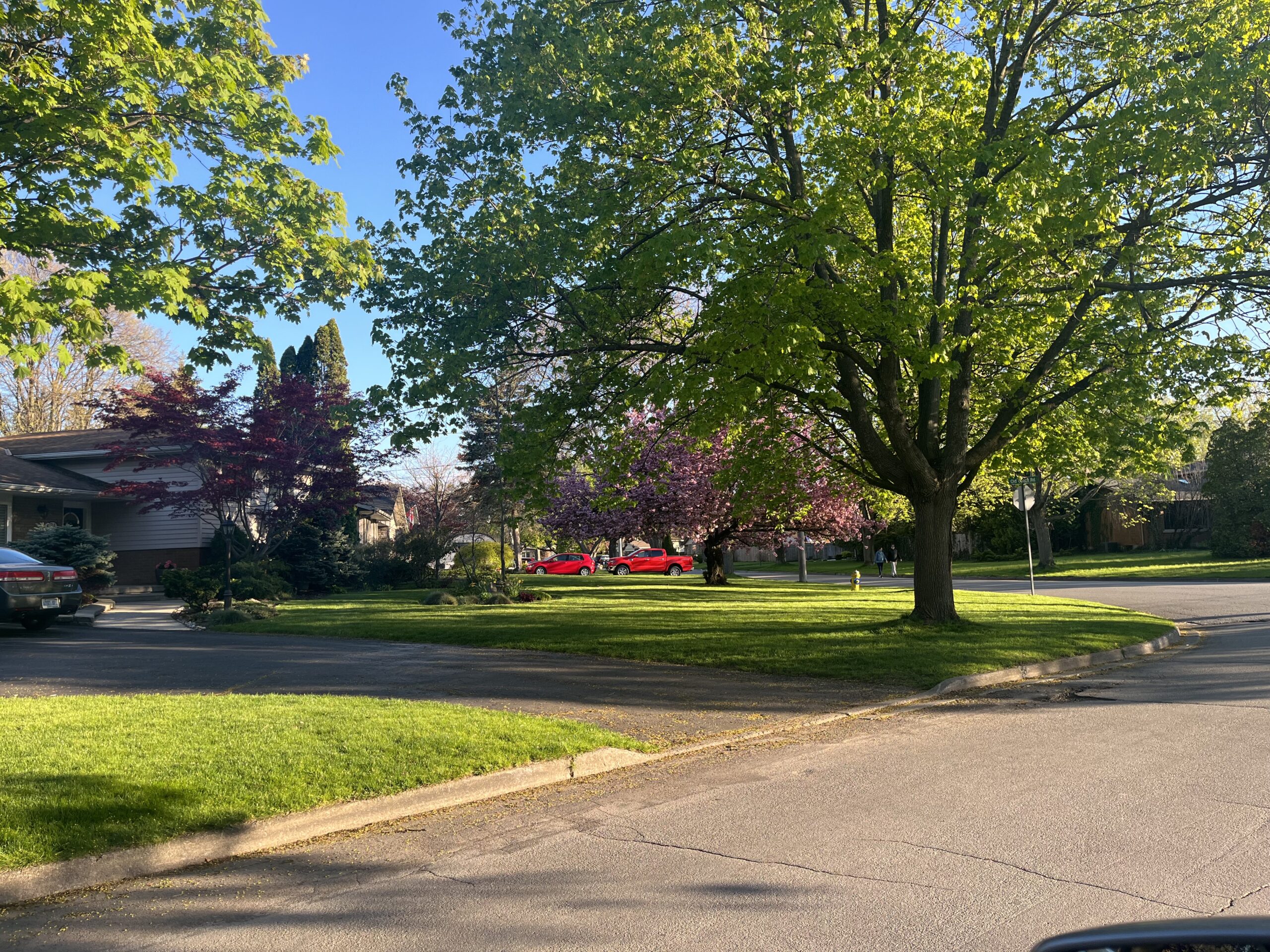
The majority of homes in the Lakeshore neighbourhood and the surrounding north end were built between the 1950s and the 1980s. Post-war bungalows are the most common property type, with backsplits, sidesplits, and two-storey homes also well represented. Lots are generally generous by Niagara standards, with mature trees and established landscaping that takes decades to replicate in newer builds.
Renovation and Inspection Realities
These are older homes and inspections are not optional. Aluminum wiring is a real concern for homes built between roughly 1965 and 1975 and is the wiring issue most often flagged in this housing era. Aging plumbing, foundation settling, and older HVAC systems are all worth scrutinizing. A small subset of pre-1950 homes may also still have remnants of knob-and-tube wiring, which insurers treat seriously. The current market allows buyers to include inspection conditions in almost every offer. Use that condition. A thorough inspection on a 1960s bungalow costs a few hundred dollars and can reveal issues that change the offer price or the decision entirely.
New Builds on Established Streets
Occasionally an older home in the north end gets demolished and a builder puts up a new house on the same lot. These new builds on established streets typically price significantly above the surrounding older stock but offer modern layouts, builder warranties, and zero near-term renovation exposure. Buyers who want newer construction without moving to a new subdivision sometimes find exactly that in Lakeshore. The trade-off is a higher entry price on a street where the character and value are still set by the older homes around it.
Prices and the GTA Comparison
Pricing in the Lakeshore neighbourhood varies significantly by street, proximity to the water, and property condition. The St. Catharines MLS® HPI composite benchmark runs significantly below the GTA composite benchmark. North-end properties with strong lake proximity often trade above the St. Catharines composite benchmark, while inland streets sit closer to or slightly below it.
What GTA Equity Typically Buys in Lakeshore
A typical detached home sale in Mississauga, Oakville, or Vaughan often produces enough equity to buy a comparable detached home in Lakeshore with a substantially smaller mortgage, or in many cases no mortgage at all. The equity gap between a Mississauga detached benchmark and the St. Catharines composite benchmark frequently runs into the hundreds of thousands of dollars, depending on the specific property types being compared and the timing of both transactions. The full financial comparison, including property tax, utilities, transportation, and other carrying-cost differences, is covered in our GTA vs St. Catharines cost of living article.
Why North-End Value Persists
Lake proximity is a structural value driver that does not depreciate. The Lakeshore neighbourhood has a fixed amount of land between the established residential streets and Lake Ontario, and that scarcity supports values through market cycles. The maturity of the homes, the lot sizes that newer subdivisions cannot replicate, and the trail and beach access combine to create a desirability profile that is not easily duplicated elsewhere in Niagara. While pricing softens during buyer’s markets like the current one, the underlying value proposition has generally remained resilient relative to many inland neighbourhoods.
Where to Find Current Figures
For current month-by-month figures, the Canadian Real Estate Association publishes data via the Niagara Association of Realtors® for the St. Catharines side, and TRREB Market Watch covers the GTA side. Specific dollar figures for properties in the Lakeshore neighbourhood depend on street, lot, and condition. We share comparable sales with every buyer before any offer.
This is our neighbourhood. Let us show you what most buyers never see.
Walking the streets at different times of day, the inspection realities, the specific blocks that hold value. Let us show you the community from the inside.
Honest Trade-offs
No neighbourhood is right for every buyer. GTA buyers should go in clear-eyed on the following points.
Car Dependency
The north end is not walkable in the GTA sense. Even with grocery options close by, most residents drive for daily errands. The Waterfront Trail is exceptional for recreation, but it does not substitute for transit or walkable retail. Buyers expecting a car-free lifestyle will be disappointed.
Older Homes and Ongoing Maintenance
Post-war homes require more ongoing maintenance than newer builds. Windows, roofs, insulation, plumbing, and electrical systems all have finite lifespans, and many north-end homes are approaching or past typical replacement cycles. Factor renovation and maintenance costs into your budget honestly before committing to a property in this price range.
Seasonal Variation
The north end feels different in January than it does in July. The waterfront lifestyle is compelling in summer. In winter, the Niagara region is generally milder than the GTA because Lake Ontario moderates temperatures along the south shore. Annual snowfall in St. Catharines averages around 137 cm based on Environment Canada climate normals, which is similar to Niagara Falls and slightly higher than Toronto. The waterfront character is something worth experiencing in different seasons before committing.
Resale Variability
Well-priced detached homes in the Lakeshore neighbourhood have historically sold with reasonable speed. The current buyer’s market means homes are sitting longer than they did at peak. Months of inventory across the Niagara region sat at 5.9 in March 2026, well above the long-run average of 3.1 months, which means buyers have more time and negotiating room than at peak. The area retains consistent demand from both local and GTA buyers, and proximity to the lake is a durable value driver that holds up through market cycles better than many other neighbourhood attributes.
What Holds Value Best in Lakeshore?
Not every street and not every block holds value equally, even within a neighbourhood as compact as Lakeshore. After living here and working with buyers in the area, the patterns we see are consistent.
Lake Proximity and Trail Access
Streets within a five to seven minute walk of Lake Ontario or the Great Lakes Waterfront Trail consistently command the strongest pricing and resell most reliably. Properties where the daily lake walk is a habit rather than a destination hold their value through market cycles. The further inland you go, the more the value driver shifts from waterfront proximity to lot size and home condition.
Quieter Residential Streets
Quiet residential streets without through-traffic or commercial frontage hold value better than properties on busier corridors. Buyers in Lakeshore are typically choosing the area specifically for its residential character. Properties that maximize that character through street choice resell more easily and at firmer prices.
Mature Lots and Tree Canopy
Lot size and the maturity of the surrounding trees are real value drivers. Larger lots with mature trees take decades to replicate in newer subdivisions, and that scarcity is permanent. Properties with generous lots tend to attract more interest at resale, especially from GTA buyers coming from smaller modern subdivision lots.
Avoidance of Specific Risk Factors
Some streets sit closer to busier roads, commercial corridors, or older industrial reminders that affect resale. We walk every block with buyers before they commit because the difference between two streets that look similar online can be meaningful in person. Knowing which addresses to favour and which to avoid is one of the practical reasons we recommend buyers work with someone who lives in the community.
Who Lakeshore Suits Best
The Lakeshore neighbourhood suits buyers who have made a deliberate choice to prioritize water proximity and outdoor lifestyle over urban convenience. The profile we see most often is empty nesters selling a large GTA home with significant equity. They want a right-sized property where the morning walk is along a lake, not a subdivision sidewalk. If downsizing is part of your motivation, our Ontario downsizing guide covers the financial and practical decisions that run alongside the move.
It also suits hybrid commuters needing Toronto access two or three days per week. The St. Catharines GO Station is a reasonable drive, with limited weekday GO Train service to Union Station. The schedule currently suits occasional commuters more than a full daily commute. For buyers comparing Niagara markets, see our Niagara Falls residential overview or the Welland and Thorold affordable Niagara option for lower-priced alternatives.
Who Should Probably Avoid Lakeshore?
The neighbourhood is not the right fit for everyone, and saying so up front saves buyers time.
Buyers Who Want Walkable Urbanism
If your daily routine depends on walking to coffee shops, restaurants, and small retail rather than driving, Lakeshore will frustrate you. The area is residential by design, and the commercial corridors are a drive away. Buyers who specifically want a walkable downtown lifestyle should look at downtown St. Catharines, downtown Niagara-on-the-Lake, or stay in their current GTA neighbourhood.
Buyers Who Want Turnkey Modern Subdivisions
Most homes were built between the 1950s and 1980s. Buyers who want new construction with builder warranties, modern open-concept layouts, and zero anticipated near-term maintenance will be happier in newer subdivisions further south or in newer Niagara Falls and Welland builds. Lakeshore is the wrong starting point for buyers whose tolerance for renovation, system updates, and older-home quirks is low.
Heavy Daily Toronto Commuters
If you need to be in downtown Toronto five days a week with full flexibility on departure and return times, the current GO Train schedule will not support that pattern reliably. Driving the QEW daily from Lakeshore is possible but builds substantial windshield time into every weekday. Full-week commuters typically do better staying closer to the GTA, in places like west Oakville or Burlington, until GO frequency improves materially.
Buyers Sensitive to Maintenance Exposure
Older homes come with mature systems, mature trees, mature lots, and the maintenance that goes with all of it. Buyers who are emotionally or financially sensitive to surprise repairs, dated finishes, or older mechanical systems should either set aside a meaningful renovation budget before buying or look at newer construction. Going in with eyes open about the maintenance exposure is the difference between a buyer who is happy here long term and one who regrets the move.
Should GTA Buyers Consider Lakeshore?
The article gives you the full picture, but the decision itself comes down to a few clean trade-offs.
- Yes, if daily lake access and an outdoor lifestyle are central to what you want from the move.
- Consider it if you are open to older homes that need due diligence before any offer before any offer.
- Lean toward yes if you are an empty-nester downsizer with significant GTA equity to deploy.
- Probably not if you want a car-free walkable urban lifestyle; downtown St. Catharines fits that better.
- No, if maximum affordability is the primary goal; Welland and Thorold deliver lower entry points.
If most of those answers point toward yes, Lakeshore is worth a serious look. The specific street and house matter more than the broad neighbourhood label, and that is where having someone who lives in the community helps.
From Our Experience
From Our Experience
We chose the Lakeshore neighbourhood specifically because of the water, but what we did not fully anticipate before moving was how the access actually changes your daily habits. When the lake is at the end of the street, you go. The Waterfront Trail becomes part of your routine rather than something you plan for on weekends. In summer, the farm stands nearby mean fresh tomatoes, corn, and peaches at a fraction of grocery store prices. That was a genuine and welcome surprise.
Keith crosses the street most days and sits on a bench overlooking Lake Ontario for twenty minutes. That bench was one of the reasons we chose this street specifically. The wind off the lake comes through the mature trees constantly and you can hear the leaves rustling from inside the house. I love that sound. In our previous life in the GTA I never knew what our neighbourhood sounded like. Here I do, in every season.
The pride of ownership in the gardens on our street and the surrounding streets is something I genuinely did not expect. Front gardens are maintained as if people are competing, and some of them probably are. The nurseries in and around St. Catharines are exceptional. Sunshine Express Garden Centre in particular is worth the trip in spring even if you are not buying anything. The flowers alone are worth seeing.
The age of the homes was something we thought carefully about before buying. Our home required some updates, and we knew that going in. The inspection gave us a clear picture of what was needed and what was not urgent. For GTA buyers used to newer builds or recently renovated homes, the adjustment to a post-war property takes some recalibration. The trade-off is lot size, mature trees, and a neighbourhood character that newer developments cannot replicate. We make that point to every buyer we work with in Lakeshore because we have lived through the decision ourselves.
Lakeshore St. Catharines: Your Questions Answered
How close is the Lakeshore neighbourhood to Lake Ontario?
Depending on the specific street, Lake Ontario is a three to ten minute walk from most properties in the Lakeshore neighbourhood. Homes closest to the lakeshore command the highest prices. Streets in the Lake Street and Vine Street corridors offer strong proximity at slightly lower price points. The Waterfront Trail is accessible on foot from most addresses, and Sunset Beach in nearby Port Weller is a short walk or drive away.
What are home prices like in the Lakeshore neighbourhood of St. Catharines?
The St. Catharines MLS® HPI composite benchmark was $580,800 in March 2026 according to the Niagara Association of Realtors®, a decrease of 6.2% compared to March 2025. Pricing in the Lakeshore neighbourhood varies meaningfully around that benchmark depending on lake proximity, street, lot, and property condition. Homes with strong lake proximity typically trade above the St. Catharines composite, while inland streets sit closer to or slightly below it. We share comparable sales for every property we show because individual pricing varies more than benchmarks suggest.
Is the Lakeshore neighbourhood good for downsizers from the GTA?
Yes, Lakeshore is a common landing spot for GTA downsizers. Empty nesters selling a large Mississauga or Vaughan home typically bring enough equity to buy in the Lakeshore neighbourhood with a significantly smaller mortgage or no mortgage at all. Right-sized homes, waterfront access, and lower carrying costs address the main goals that drive downsizing decisions.
Do I need a car in the Lakeshore area of St. Catharines?
Yes. The north end is car-dependent for most daily errands. Grocery options and everyday services are close, but not walkable in most cases. The Waterfront Trail is excellent for recreation but does not substitute for transit or walkable retail. Buyers expecting to go car-free will find the north end does not support that lifestyle.
What should I watch out for when buying in the Lakeshore neighbourhood?
The age of the homes is the main due diligence consideration. Aluminum wiring in homes from roughly 1965 to 1975 is the most common wiring concern, with knob-and-tube remnants possible in the small subset of pre-1950 stock. Aging plumbing and foundation issues appear with enough frequency that a thorough inspection is essential. The current market allows inspection conditions in almost every offer, so use one. Also check the specific street carefully because proximity to the water and neighbourhood character vary meaningfully within the community.
How does Lakeshore compare to Port Dalhousie?
Port Dalhousie offers a more defined village character with a marina, Lakeside Park, and a harbour scene. The Lakeshore neighbourhood is quieter and more residential in character throughout the year. Port Dalhousie commands higher prices and has a more tourism-adjacent feel in summer. The Lakeshore neighbourhood tends to suit buyers who want daily lake proximity without paying the village premium or experiencing summer tourism activity.
About the Authors
Keith & Françoise Real Estate Team
eXp Realty Brokerage · GTA & Niagara Region
Françoise Pollard, Realtor®, and Keith Goldson, Broker, live in Lakeshore, a neighbourhood in the north end of St. Catharines and work the GTA-to-Niagara corridor every day. Combined experience: more than 30 years. We work both ends of every transaction and have helped GTA buyers find the right Niagara community for their financial and lifestyle goals across St. Catharines, Niagara Falls, Welland, Thorold, and Grimsby.
Tour Lakeshore With Someone Who Lives Here
No other team can show you Lakeshore from the inside. We can walk you through the streets, the inspection realities, and the specific blocks that hold value through market cycles.
Book a Lakeshore WalkthroughMarket conditions, pricing, and neighbourhood character vary by location, property type, and timing. St. Catharines HPI composite benchmark $580,800 sourced from the Niagara Association of Realtors® via CREA Statistics, MLS® Home Price Index, March 2026. GTA composite benchmark from TRREB Market Watch. Wiring and inspection guidance is general and based on our experience working with buyers in this housing era; every property is different and buyers should rely on a qualified home inspector and electrician for property-specific assessment. Happy Rolph’s Animal Farm is operated by the City of St. Catharines; current hours and access details are published by the City. For advice specific to your situation, speak with a qualified real estate professional before making decisions.