

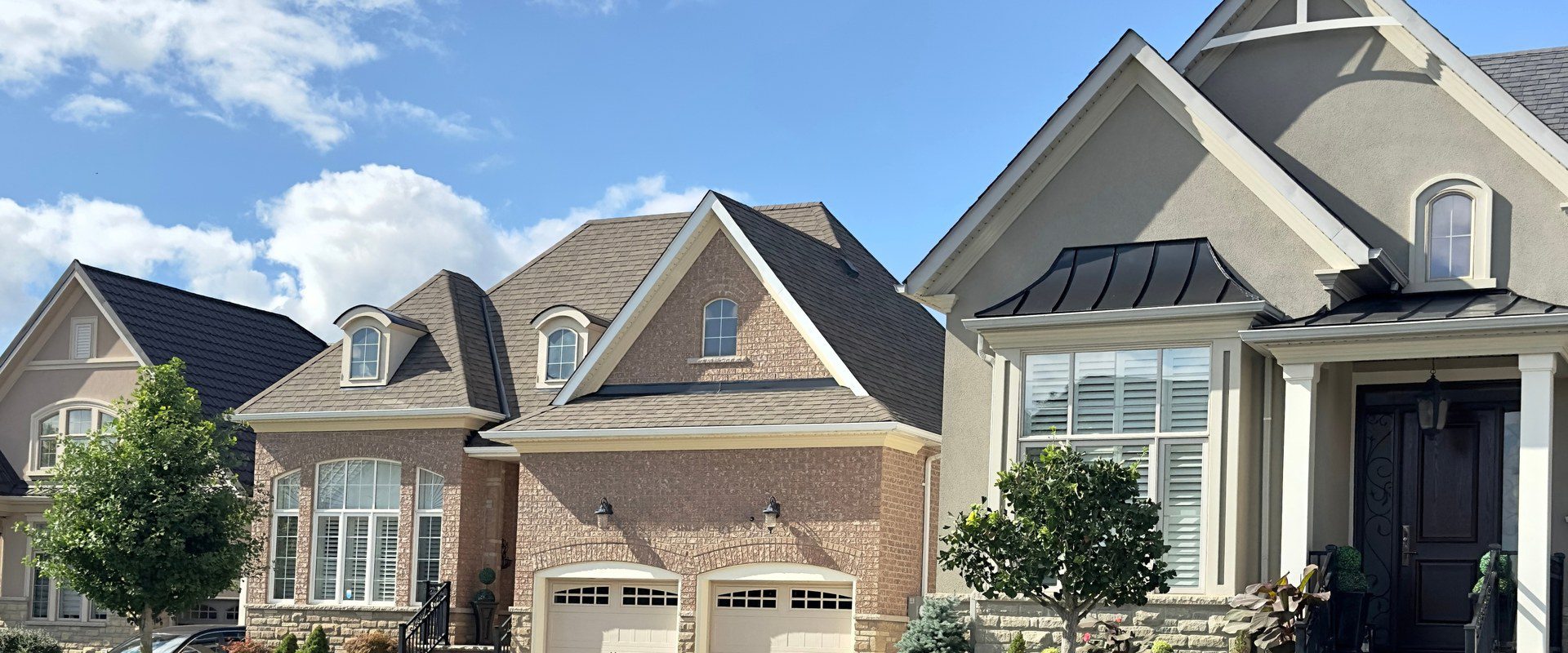
Caledon Community Guide
Caledon.
The country edge of Peel.
Caledon is the large, mostly rural town at the top of Peel Region, and a Caledon address can mean radically different lives. In fact, Southfields, Bolton, Caledon East, Belfountain and a rural acreage property are barely the same place. We owned two homes in Southfields in the 2010s, so this guide is about what living in Caledon is actually like, area by area.
Caledon is the large, mostly rural town at the top of Peel Region. In short, living in Caledon means choosing space, countryside and bigger lots over walkable density and quick transit.
Property types vary considerably across the town, from townhouses and semis in newer communities such as Southfields, to detached homes in Bolton and Caledon East, to country properties and large estates on acreage. Large portions of Caledon are protected by Ontario’s Greenbelt, and parts also fall within the Niagara Escarpment Plan area, so where and how new homes can be built is tightly controlled.
There is still no GO train, though the Town launched an on-demand transit pilot in September 2026, so plan to drive for most trips. We owned two homes in Southfields in the 2010s and later moved on, so we can talk this through from both sides.
About 76,600 residents across roughly 689 square kilometres, the largest and most rural municipality in Peel Region by area.
Large portions of the town are protected by Ontario’s Greenbelt, and parts also fall within the Niagara Escarpment Plan area.
No GO train yet. Caledon runs on cars, plus Brampton Transit routes, GO buses and a new on-demand pilot launched in September 2026.
What living in Caledon is actually like
On paper, Caledon is a large municipality north of Brampton known for countryside, established communities and protected green space. In practice it is five or six very different places that happen to share a name, and the gap between the paper version and the lived one is where most buyers get surprised.
Why we moved in
At first, Caledon pulled us in with space and a genuine village feel. Southfields was sold as a small village, and back then it still felt like one.
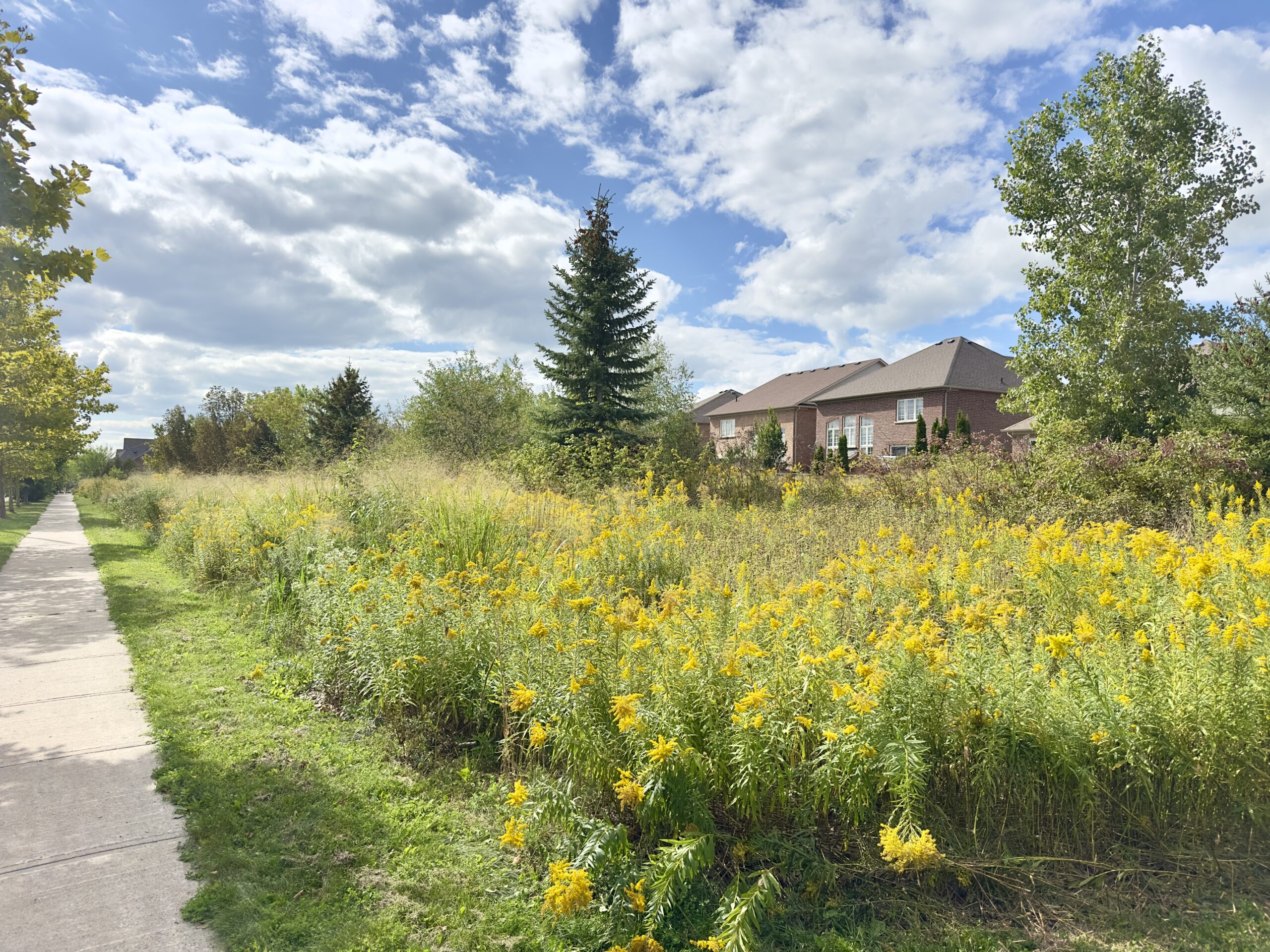
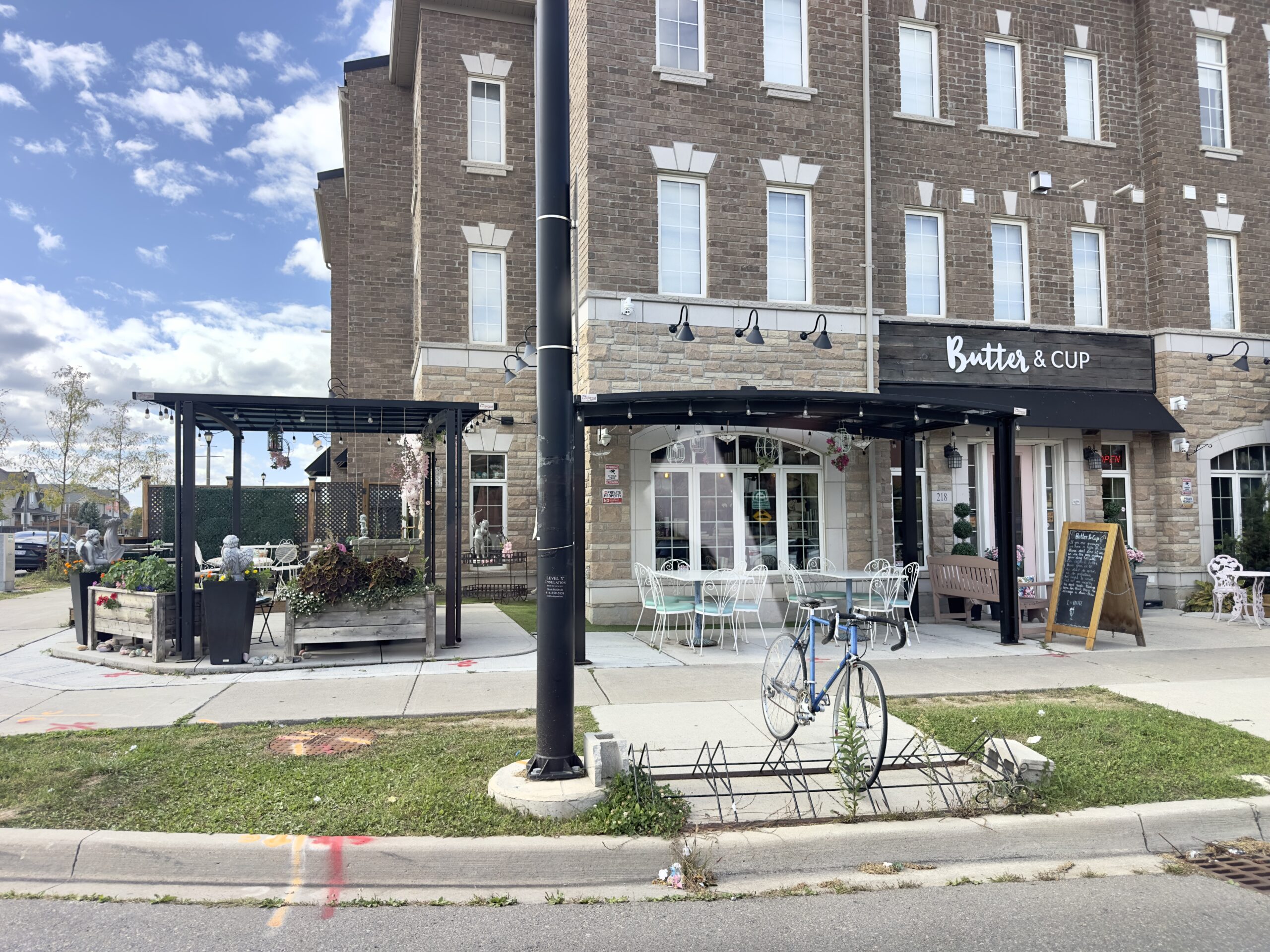
We especially loved the walks along the Etobicoke Creek path that runs out of Southfields toward Brampton. Soon the scones at Butter & Cup on Dougall Avenue became a weekend habit. As the years passed, builders kept adding streets, a community centre arrived, and the everyday conveniences slowly caught up.
Why we moved on
Here’s the honest part, and it isn’t a complaint about Caledon. Then Keith spotted an opportunity in Vales of Humber, a brand new Brampton subdivision of only detached homes. We could buy a larger house there, so we took it.
From there we later moved to Vaughan, and in 2025 we made our own GTA-to-Niagara move to St. Catharines.
The takeaway is short. Living in Caledon rewards households that genuinely want the country edge, and it asks more of anyone who leans on transit and walkable convenience. Ultimately, knowing which one you are is the whole decision.
How Caledon got here
Caledon Township, Albion Township, the part of Chinguacousy north of Mayfield Road and the villages of Bolton and Caledon East merge into one Town of Caledon inside the new Region of Peel.
Ontario’s Greenbelt protects large portions of Caledon’s land, which is a significant reason the town still looks rural while Brampton built out below it.
We bought a semi-detached in Southfields in 2010, then moved up to a detached home in 2014, and watched the village keep filling in.
Highway 410 already runs north to Highway 10 at Hurontario, and interchange improvements there are in detail design with no confirmed construction date. Highway 413 has been designated and some Early Works are proceeding on their own schedules, but the main highway still waits on detail design, funding and approvals. Meanwhile, Caledon continues to push for a Bolton GO train.
Caledon at a glance
Five parts of town, five different daily routines. So this is the quickest way to see which one you are actually shopping for.
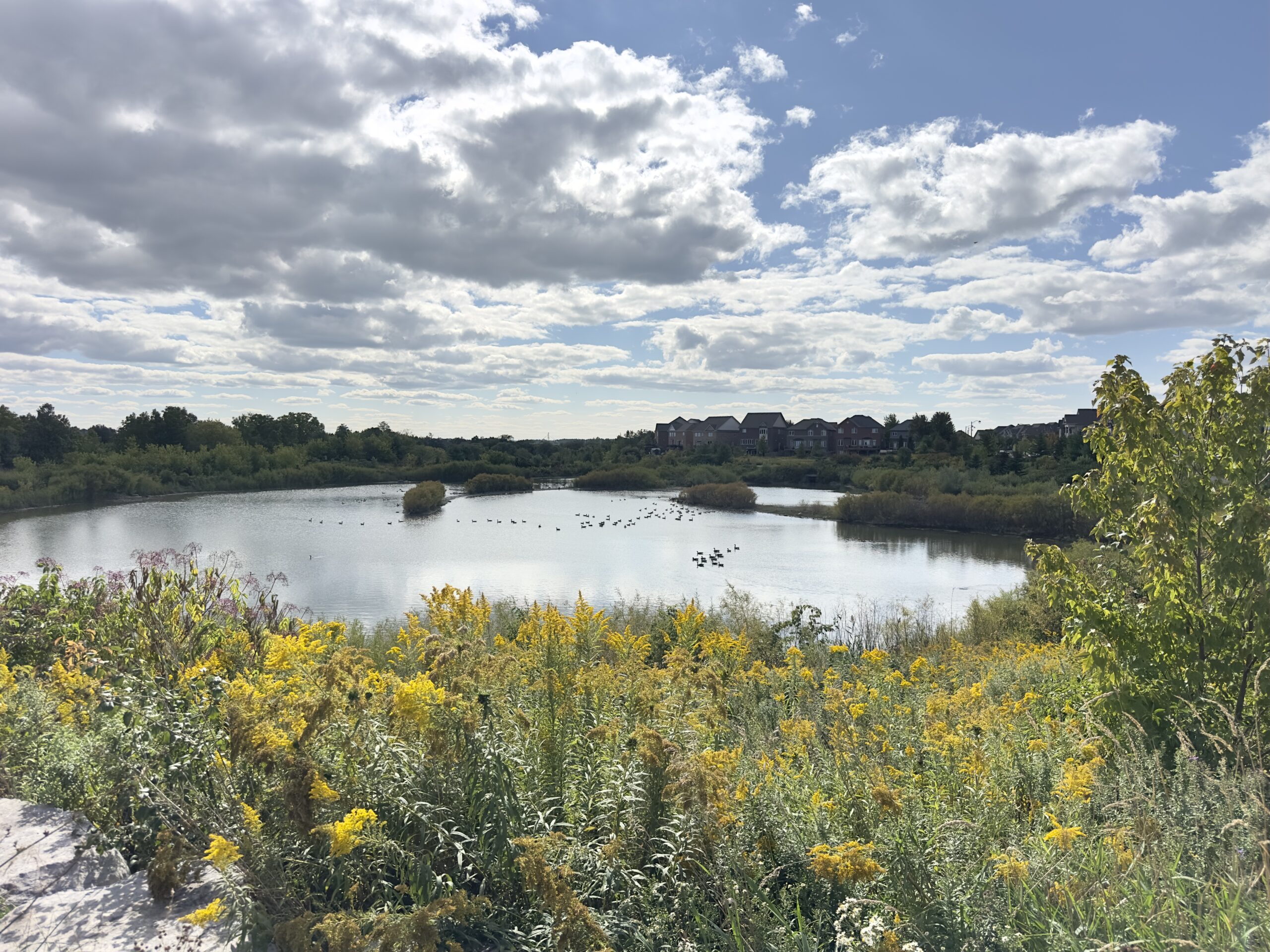
A pond and open green space backing onto homes in Southfields, Caledon. Photo by Keith & Françoise.
| Area | Typical homes | Lots and land | Getting around | Feel | May appeal to |
|---|---|---|---|---|---|
| Mayfield West / Southfields | Newer subdivision: townhomes, semis, detached | Standard suburban lots, municipal services | Closest to Brampton and Highway 410 | Planned suburban village | Households looking for newer homes and nearby amenities |
| Bolton | Mixed: older town, newer estates, some condos | Varies widely, town lots to hillside estates | Highway 50 toward Vaughan and the 427 | Walkable historic core | Town life with a rural edge |
| Caledon East | Detached homes | Larger lots, more space between neighbours | Airport Road, drive-dependent | Quiet, established | Space without going fully rural |
| Villages: Inglewood, Alton, Cheltenham | Character homes, hamlets | Irregular village lots, limited supply | Scenic, car only | Historic and artsy | People drawn to historic character, arts and village life |
| Rural & estate Caledon | Acreage, hobby farms, custom estates | Acreage on private well and septic | Long drives, no transit | True countryside | Land, horses, privacy |
Caledon vs Brampton: which fits you?
Caledon gives you more space and quiet, while Brampton gives you transit, services and a shorter commute. We owned in both, so here is the honest split rather than a sales pitch.
On the Caledon side, you get larger lots, the Greenbelt at your doorstep and a rural pace. But there is no GO train and no hospital in town. By comparison, on the Brampton side you get GO train service on the Kitchener line, Brampton Civic Hospital and Züm rapid bus. You also get far more shopping, at the cost of density and smaller lots.
Southfields vs north Brampton
This is the closest head-to-head, because Southfields in Caledon sits right against north Brampton areas like Snelgrove. The homes can look similar, yet the municipal line matters. So Southfields runs on Town of Caledon services and taxes.
Meanwhile, a few minutes south, the City of Brampton offers full transit. Mount Pleasant GO at 1600 Bovaird Drive West sits on the Kitchener line and has free customer parking, which is why many Caledon commuters drive there rather than further south. Indeed, for commuters that GO access is often the deciding factor. Our Brampton community guide covers the city side in detail.
Caledon neighbourhoods, area by area
This is the section that matters most, because Southfields, Bolton, Caledon East, Belfountain and a rural acreage property offer genuinely different lifestyles while all carrying a Caledon address. Below we’ve grouped the town the way locals think about it, rather than by postal code.
Mayfield West and Southfields
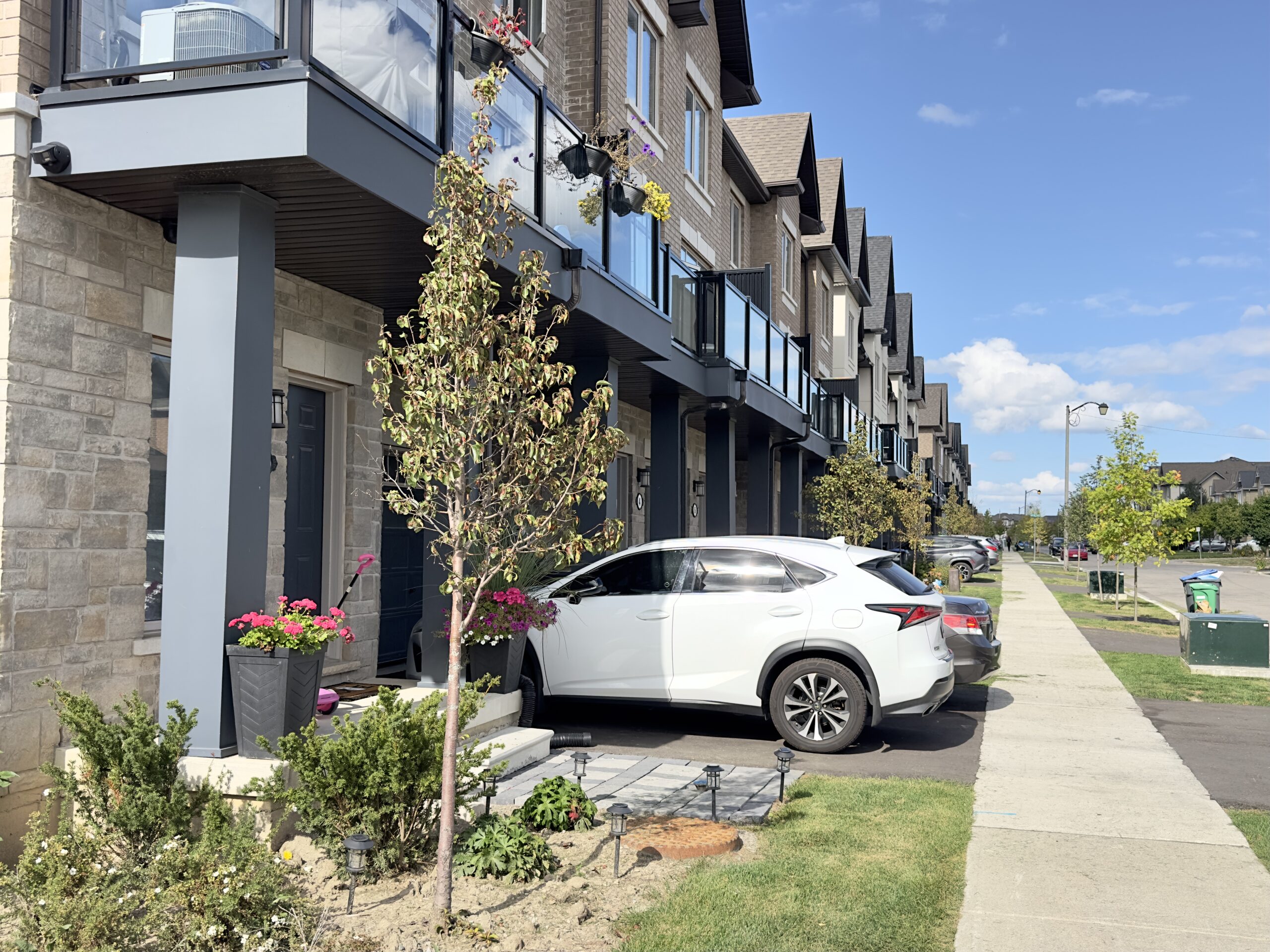
Southfields Village
This is the Caledon most newcomers meet first, since it sits right on the Brampton border with the easiest reach to Highway 410. At first it was planned as a small village. Yet over the years different builders kept adding streets, so it now feels like a full suburb.
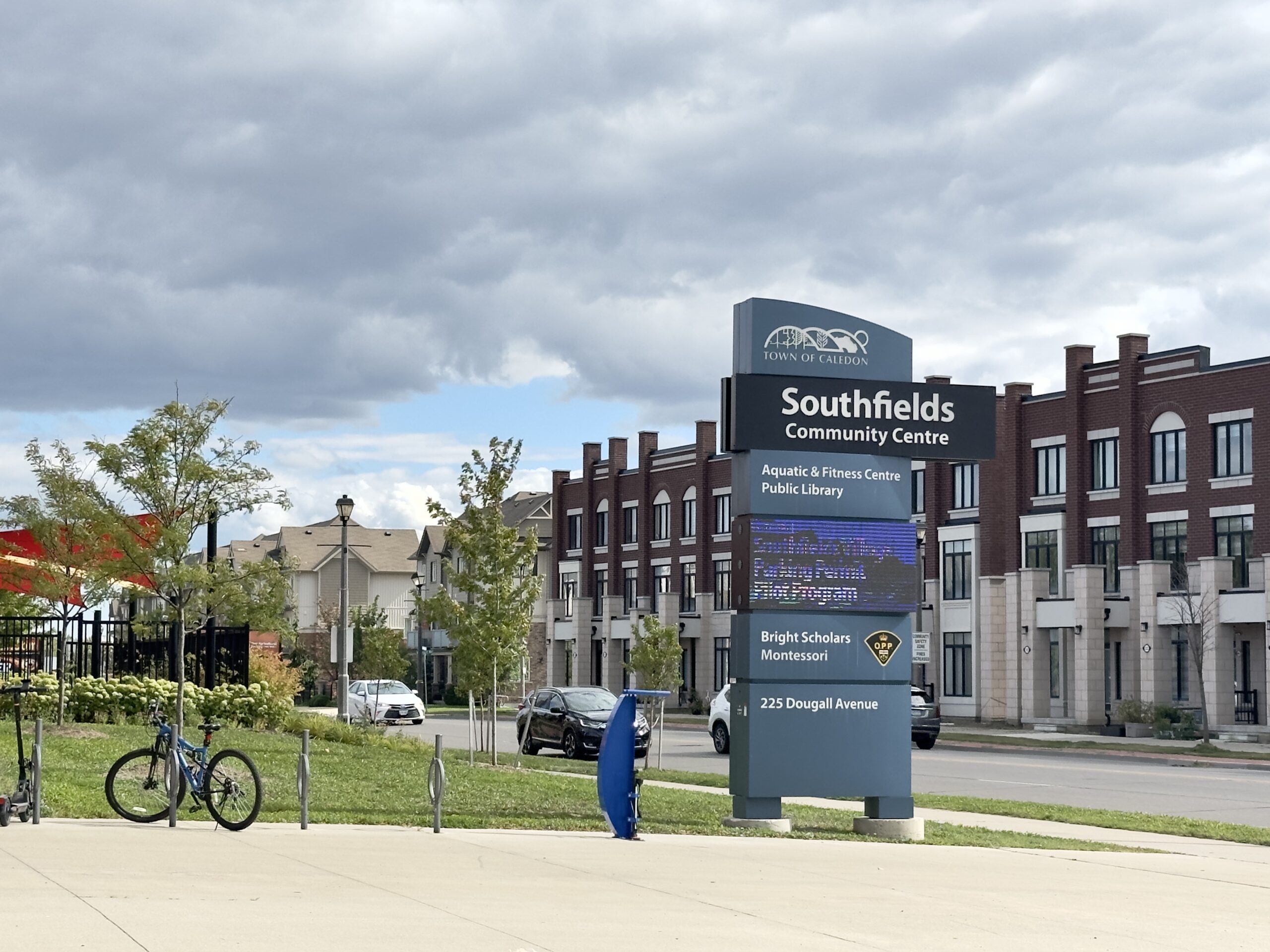
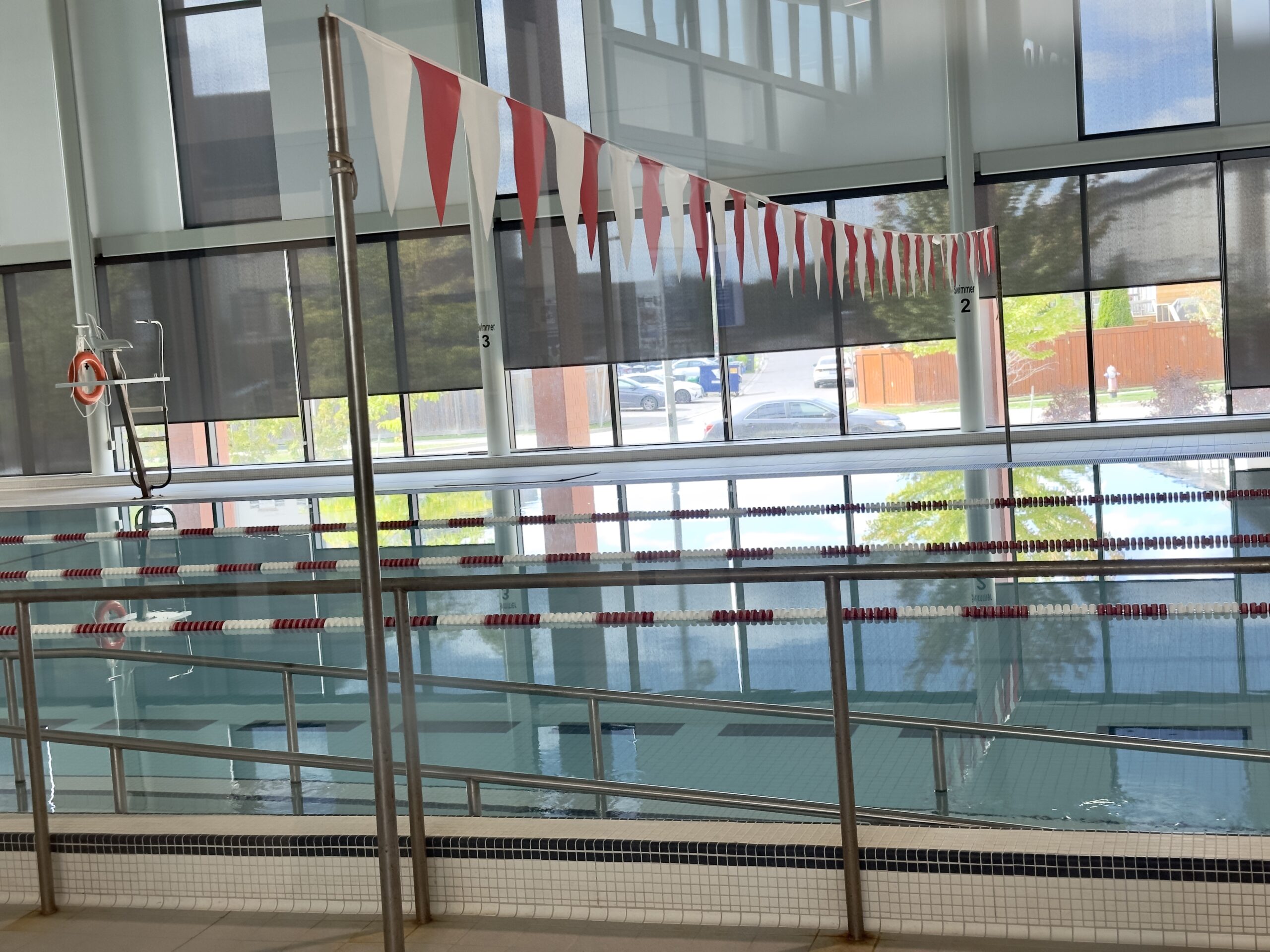
The Southfields Community Centre at 225 Dougall Avenue opened on 21 September 2020, the Town’s first new community centre in 18 years. It runs 65,000 square feet with Caledon’s first two-tank swimming pool, a Caledon Public Library branch, a fitness centre and aerobics studio, and youth and seniors’ rooms. Nearby you’ll also find The Mega Gym, a 70,000-square-foot fitness and sports complex on Abbotside Way. Cafés like Butter & Cup on Dougall Avenue round out the local spots.
May appeal to: households looking for newer homes with amenities close by.
Mayfield West (wider)
In addition, the broader Mayfield West area keeps growing along Kennedy Road and Mayfield Road. Because it’s the urban edge of an otherwise rural town, you get newer homes and schools here while open countryside starts just minutes north.
May appeal to: households who want a newer home a short drive from Brampton services.
Bolton and the east
Bolton
Bolton is the biggest community in Caledon, and the one that feels most like a town. Bolton also has a historic main street along the Humber River, plus newer estate pockets on the hills above it. Since it sits next to York Region, many residents commute toward Vaughan and the 427 rather than south through Brampton.
May appeal to: people who want town amenities without giving up a rural backdrop.
Caledon East
In contrast, Caledon East offers a quieter, established feel with bigger lots and easy access to Airport Road. While it’s more spread out than Bolton, it still has the everyday basics, so it suits buyers who want room without a fully remote address.
May appeal to: households looking for more space while staying close to amenities.
The villages and hamlets
Inglewood, Alton & Cheltenham
Notably, these small villages carry Caledon’s old-Ontario charm, with the Alton Mill Arts Centre, the Bruce Trail and the Cheltenham Badlands all close by. Homes here are limited and character-driven, so they tend to attract buyers who fall for a specific street rather than shop a whole subdivision.
May appeal to: people drawn to historic character, the arts and a slower weekend pace.
Palgrave, Terra Cotta & Belfountain
Further out toward Palgrave, Terra Cotta and Belfountain, Caledon turns into true countryside near the Forks of the Credit. Generally, expect larger properties, conservation land and the kind of quiet that’s hard to find this close to Toronto.
May appeal to: people who value nature, trails and seclusion.
Rural and estate properties
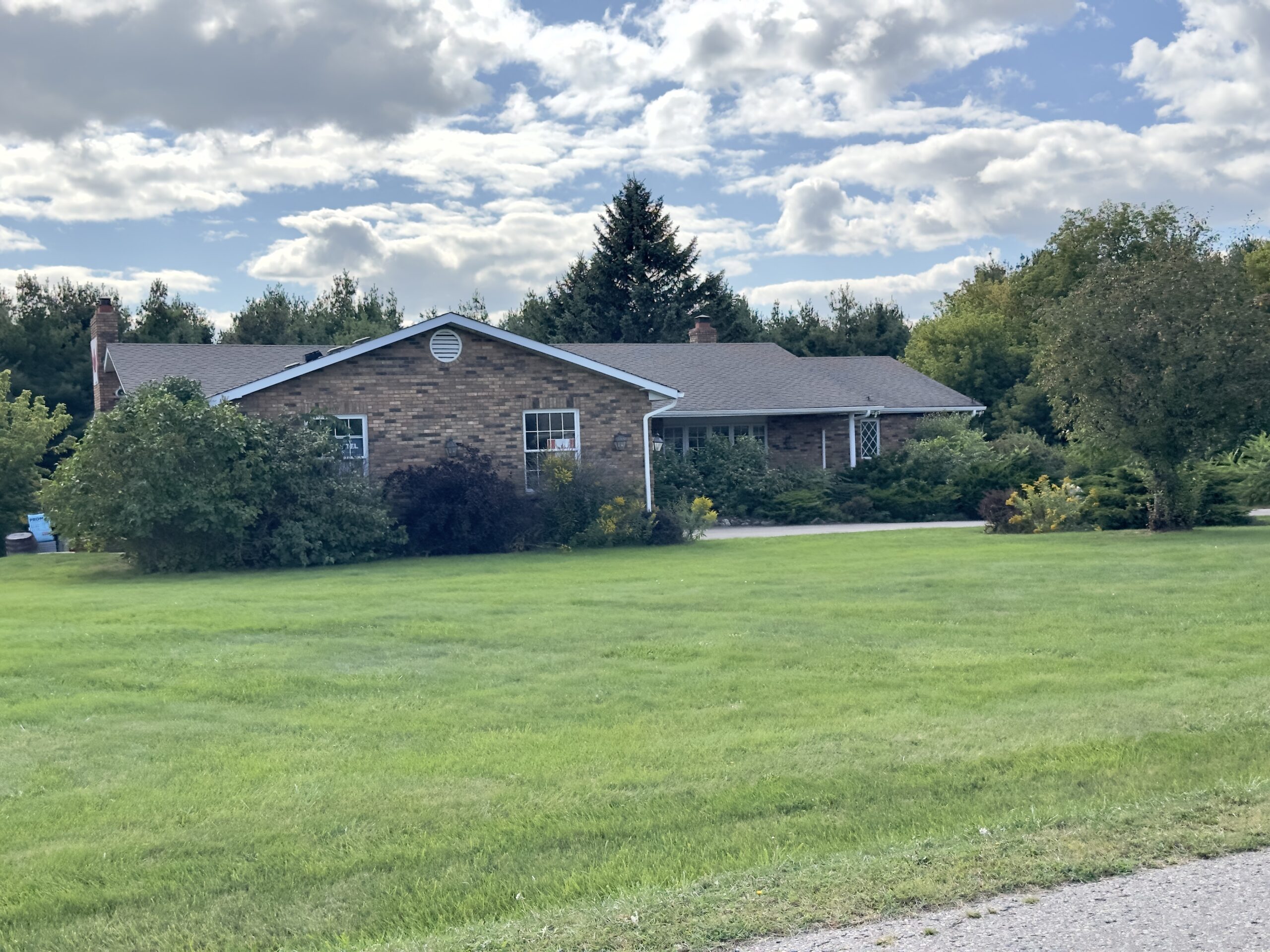
A country property on a rural Caledon road. Photo by Keith & Françoise.
Acreage & country estates
Throughout the town you will also find hobby farms, custom estates and acreage lots. Many of them run on private wells and septic systems rather than municipal water and sewers.
So the buying process adds steps a city purchase never needs. Specifically, make water potability testing and a septic inspection conditions of your offer, and ask for the well record along with any pump or tank service history.
May appeal to: people looking for land, horses, privacy and a rural lifestyle.
A note on building new
Greenbelt and Escarpment limits
If you’re dreaming of building, know that large portions of rural Caledon are protected by the Greenbelt, and parts of the town also fall within the Niagara Escarpment Plan area. Together with other provincial and municipal planning policies, these protections influence where and how development can occur. As a result, you often need a development permit and can’t simply sever a lot.
May appeal to: people considering a custom build who want the planning rules up front.
The trade-offs of living in Caledon
Caledon offers something increasingly difficult to find this close to Toronto: space, countryside and communities surrounded by nature. However, the trade-off is convenience. In particular, daily life is more car-dependent, transit is limited, and some services require a longer drive. In the end, whether that works for you depends largely on the lifestyle you want.
What you gain
Above all, you get larger lots, quiet, trees and trails that Brampton and Mississauga simply can’t offer at the same scale. Moreover, you get a small-town pace and a strong sense of community, especially in Bolton and the villages.
What you give up
On the other hand, living in Caledon means trading transit and convenience for a car-first life. There’s no GO train, hospitals sit outside the town in Brampton and Orangeville, and rural homes add well and septic upkeep.
Compared to a Brampton semi or a Mississauga condo, you’ll drive more. Yet you’ll also wake up to fields instead of fences.
Caledon is not Brampton with bigger lots
Someone who wants transit, hospitals and shopping within a few minutes may find Caledon frustrating rather than peaceful.
Conversely, someone who values quiet streets, room to spread out and countryside a few minutes from the door may see those same differences as the entire point.
So the question is not which is better. It is which one fits the life you actually want.
Living in Caledon, day to day
Beyond lot size and scenery, daily logistics decide whether living in Caledon actually works for you. So here’s how the practical stuff plays out across town.
Getting around
Caledon still runs mostly on cars, but that changed a little in September 2026. The Town launched Argo Transit, a 15-month on-demand pilot using electric vehicles across Bolton, Caledon East and Mayfield West and Southfields. You book by app or by phone and pay standard transit fares, and it also connects to Brampton Transit, York Region Transit and GO Transit.
Fixed routes exist too. In addition, Brampton Transit runs Route 41 into Bolton and Route 81 into Mayfield West and Southfields, with Route 18 on Dixie Road and Route 30 at Tullamore. GO Transit runs peak bus service on Route 37 between Brampton and Orangeville and Route 38 between Bolton and Malton.
There is still no GO train. The proposed Caledon-Vaughan GO rail line sits at the business case stage, with Metrolinx directed to advance it and no construction or service date published. The nearest GO train is Mount Pleasant on the Kitchener line at 1600 Bovaird Drive West in Brampton, which has free customer parking.
On the highways, Highway 410 already reaches Highway 10 at Hurontario, and the Town is working through detail design on interchange improvements there to serve Mayfield West Phase 2. Highway 413 has advanced, with the route designated in November 2025. Some Early Works are proceeding near the 401 and 407 interchange and around Highway 10 and Bovaird, though timing differs from project to project. The main highway itself has no published construction start, so treat Highway 413 as a long-term change rather than a commute fix you can plan around.
Schools
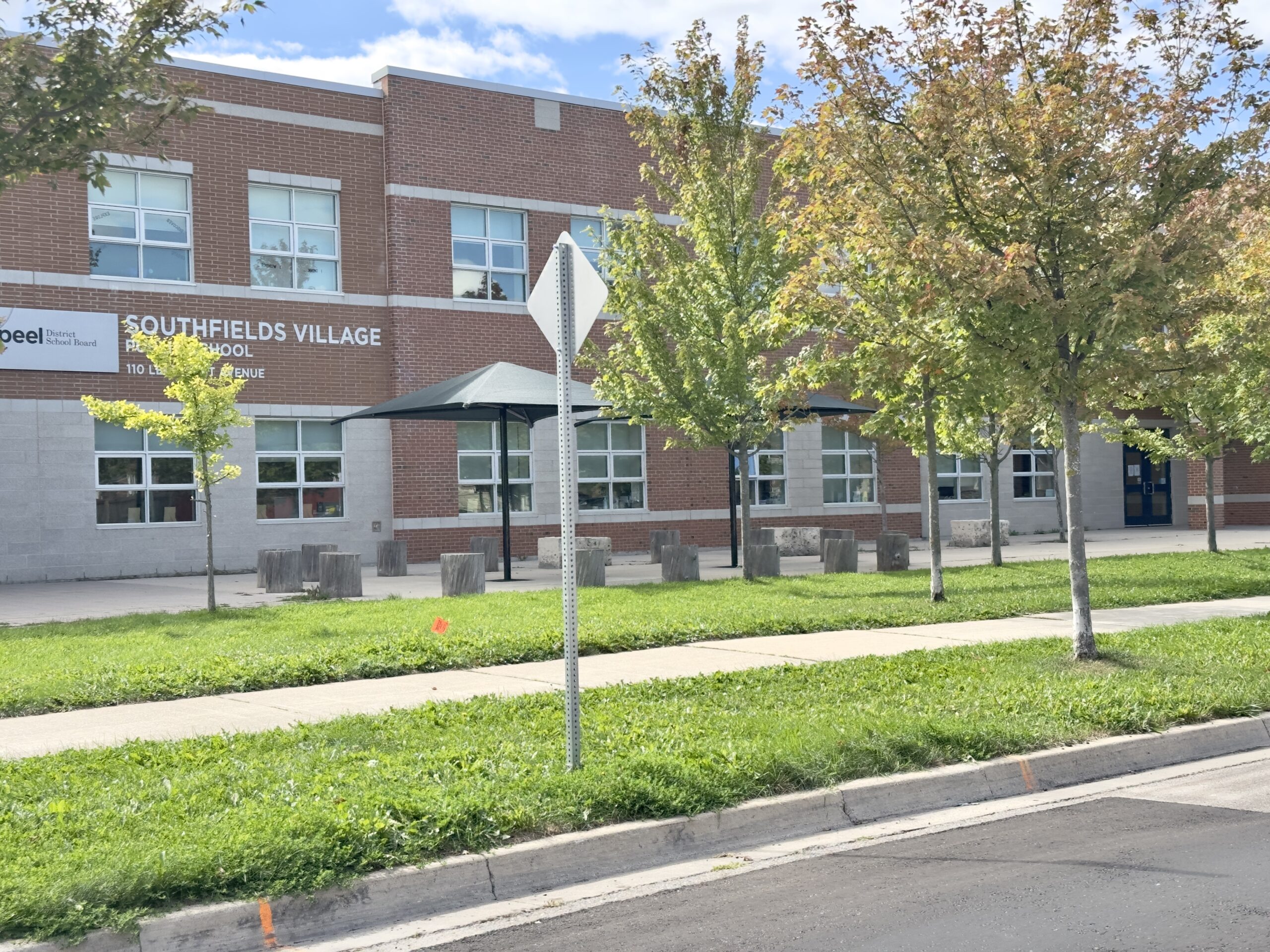
Families in Caledon attend schools in the Peel District School Board and the Dufferin-Peel Catholic District School Board. Mayfield Secondary School at 5000 Mayfield Road runs a Regional Arts Program with four specializations: dance, drama, music and visual arts. Importantly, entry is by audition, and the program draws students from across Brampton, Mississauga and Caledon.
Because the town is spread out, catchments and busing vary a lot by area. We always check the exact catchment for a home before you make an offer.
Healthcare
Caledon has no hospital of its own, which surprises many newcomers. South Caledon residents generally use Brampton Civic Hospital, Bolton residents lean on Etobicoke General, and the north end often heads to Orangeville. Therefore, if regular hospital access matters to your household, factor the drive into your decision.
Where people work
Naturally, plenty of Caledon residents commute south into Brampton, Mississauga, Vaughan and Toronto for work. At the same time, the town has a growing employment base in logistics and industry, particularly around Bolton. Either way, expect your commute to involve a car for at least part of the trip.
What it feels like
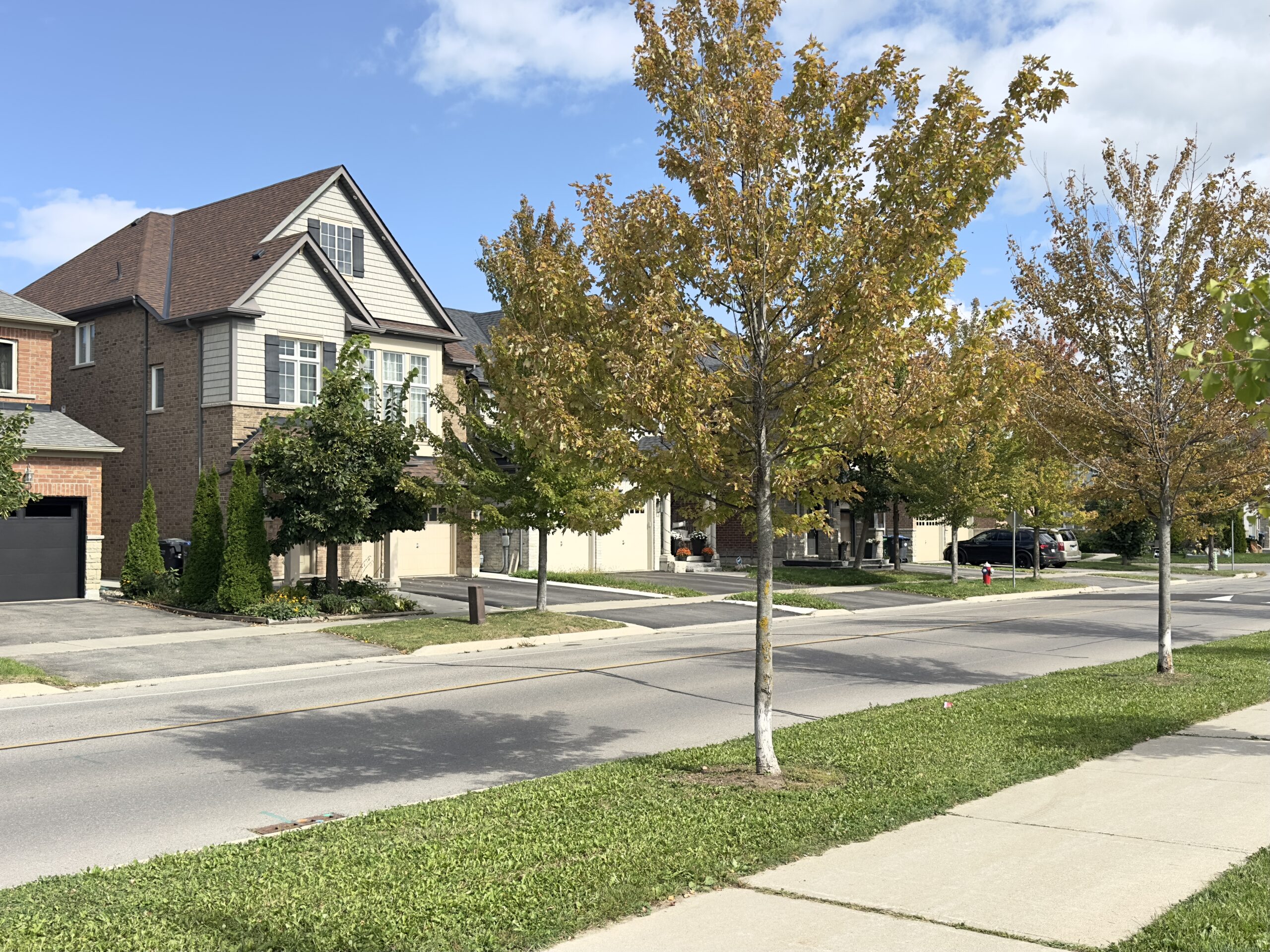
What Caledon feels like is a deep breath. For example, mornings are quiet, the seasons are noticeable, and a walk can take you along Etobicoke Creek or onto the Bruce Trail within minutes.
That trade, fewer conveniences for more nature, is the whole decision in one sentence.
Altogether, we owned two homes in Southfields and watched it change from a small village into a full suburb. That’s not a complaint, it’s the thing people should know before they buy. Caledon rewards households that genuinely want the country edge, and it asks more of anyone who leans on transit.
We’re Françoise Pollard, Realtor®, and Keith Goldson, Broker. Françoise has been licensed in real estate since 2006. Together, Françoise and Keith bring decades of combined experience helping clients across the GTA and Niagara Region.
Having also owned homes in Caledon ourselves, we can bring both professional and personal perspective to conversations about living here. We’d rather give you the honest version than the glossy one.
If you are comparing Caledon with the city below it, start with our Brampton community guide. Some Caledon owners eventually trade a large lot here for something closer to the water in Niagara, a move we have made ourselves. Our GTA to Niagara relocation guide covers that one.
See the town before you choose the street
Online research can tell you a great deal, but it cannot show you how Southfields, Bolton and rural Caledon actually feel in person. We can help you understand the communities and housing options before you narrow your search, whether you are buying here, selling here, or working out whether the town fits at all.
Caledon FAQs
Living in Caledon
Is Caledon a good place to live?
Caledon suits people who want space, nature and larger lots over walkable density and quick transit. The town covers about 689 square kilometres with roughly 76,600 residents, and large portions are protected by Ontario’s Greenbelt, so the rural character holds. The trade-off is a car-first routine, no hospital in town and no GO train.
Is Caledon part of the GTA?
Yes. Caledon is a town in Peel Region within the Greater Toronto Area, sitting directly north of Brampton alongside Mississauga and Brampton. At about 689 square kilometres it is the largest municipality in Peel by land area and the most rural.
Is Caledon a good place to raise a family?
Caledon works well for families who prioritise space and quiet. Schools run through the Peel District School Board and the Dufferin-Peel Catholic District School Board, and Mayfield Secondary School at 5000 Mayfield Road offers a Regional Arts Program in dance, drama, music and visual arts by audition. The Southfields Community Centre at 225 Dougall Avenue opened in September 2020 with a two-tank pool, a library branch and a fitness centre. Families should weigh the car-dependent routine and the absence of a hospital in town.
Transit and commuting
Does Caledon have a GO train?
No. Caledon has no GO train station as of September 2026. The proposed Caledon-Vaughan GO rail line remains at the business case stage, with Metrolinx directed to advance it and no construction or service date published. GO Transit does run peak bus service on Route 37 between Brampton and Orangeville and Route 38 between Bolton and Malton.
What public transit is there in Caledon?
Caledon launched Argo Transit in September 2026, a 15-month on-demand pilot using electric vehicles in Bolton, Caledon East and Mayfield West and Southfields, booked by app or by phone at standard transit fares, with connections to Brampton Transit, York Region Transit and GO Transit. Brampton Transit also runs fixed routes into Caledon, including Route 41 to Bolton and Route 81 to Mayfield West and Southfields. GO Transit runs peak bus routes 37 and 38.
What is the commute from Caledon to Toronto?
The commute is car-dependent and varies widely with traffic. Most residents drive Highway 410 or Highway 50 to reach Highway 401, Highway 407 or the 427. There is no GO train from Caledon, so transit commuters typically drive to a GO station in Brampton and take the Kitchener line from there. Drive the route at the times you would actually travel, in both directions, before committing to a home.
How far is Caledon from Toronto?
Caledon sits roughly 65 to 70 kilometres by road from downtown Toronto, which is about an hour’s drive without traffic. Caledon covers a large area, so the drive from Mayfield West on the Brampton border is considerably shorter than from the northern villages.
Property types and services
Why are there so many different types of properties in Caledon?
Caledon covers a very large geographic area, so housing varies considerably from one part of town to another. Southfields and Mayfield West include newer subdivisions with townhouses, semis and detached homes, while Bolton and Caledon East offer established residential areas. Rural Caledon includes country homes, acreage, farms and custom estates. Large portions of the town are also protected by Ontario’s Greenbelt, while parts fall within the Niagara Escarpment Plan area, which influences where and how development can occur.
Do homes in Caledon have well water and septic?
Many do. Rural and estate properties across Caledon typically run on private wells and septic systems rather than municipal water and sewers, while serviced subdivisions such as Southfields and Mayfield West are on municipal services. On a private-services property, budget for water potability testing and a septic inspection as conditions of your offer, and ask for the well record and any pump or tank service history.
Choosing an area and building new
What’s the difference between Bolton, Southfields and rural Caledon?
Bolton is the largest community in Caledon and the most town-like, with a historic main street along the Humber River and newer estate pockets above it. Southfields is a newer planned subdivision on the Brampton border with the easiest reach to Highway 410 and municipal services. Rural Caledon covers the villages, hamlets and acreage properties on private wells and septic.
Can you build a house on farmland in Caledon?
Often you cannot build freely. Large portions of rural Caledon are protected by Ontario’s Greenbelt, and parts of the town also fall within the Niagara Escarpment Plan area, where a development permit is usually required and severing a lot is restricted. Confirm the planning designation and permit requirements with the Town of Caledon and the Niagara Escarpment Commission before buying land you intend to build on.
This Caledon community guide combines our own experience owning two homes in Southfields with information from municipal, provincial, transportation, healthcare and educational sources, current as of September 2026. It is general information and is not legal, financial or tax advice. Services, transit plans, highway timelines, programs and development rules change, so confirm current details with the relevant authority before acting. Population and land-area figures reference the 2021 Census of Canada. Planning, permit and severance questions should be confirmed with the Town of Caledon and the Niagara Escarpment Commission. Françoise Pollard is a licensed Realtor® and Keith Goldson is a Broker with the Keith & Françoise Real Estate Team, eXp Realty Brokerage, serving the GTA and Niagara Region.