

Understanding the Ontario Standard Lease: What’s Mandatory, What’s Optional, and What Can’t Be Changed
Updated: January 2026
Answer Box
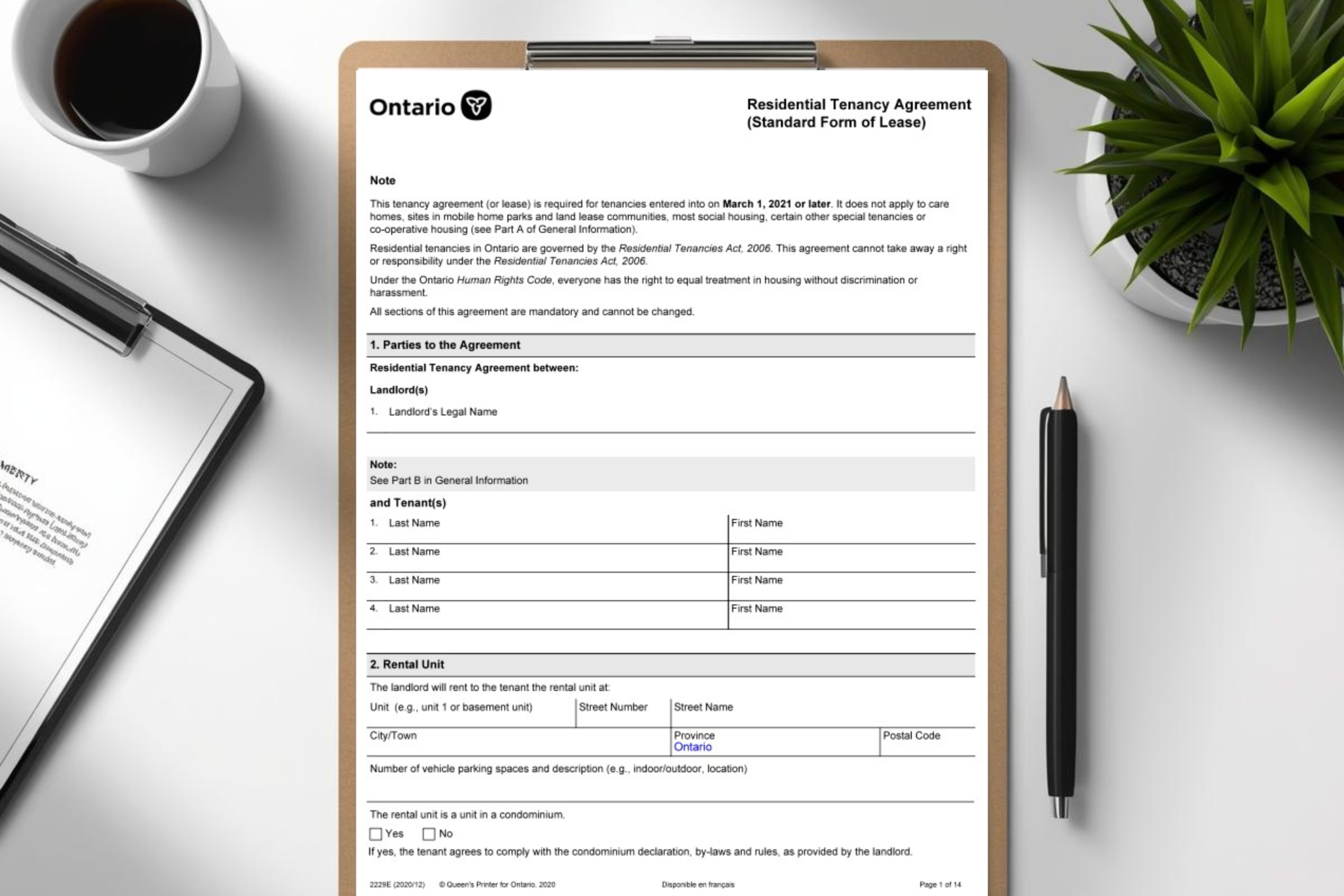
The Ontario Standard Lease is a mandatory government-issued lease form for most residential rentals in Ontario. Certain terms must remain unchanged, optional add-ons must comply with the Residential Tenancies Act, and landlords cannot remove or override tenant protections even if a tenant agrees.
Ontario Standard Lease Explained: Why It Matters
In Ontario, a residential lease is not just a private agreement between two parties. Most residential tenancies are governed by the Residential Tenancies Act, and the Ontario Standard Lease is the required lease form for most rental situations.
This distinction matters because the lease does not create the rules. The law does. A lease can clarify how a tenancy operates, but it cannot remove rights or protections that already exist under Ontario tenancy legislation.
In practice, many disputes arise not because a landlord or tenant intended to act improperly, but because the lease attempted to simplify something the law treats very specifically. Understanding how the standard lease works helps prevent that disconnect.
This article explains what parts of the Ontario Standard Lease are mandatory, what can be customized, and what cannot be changed even with tenant consent.
When the Ontario Standard Lease Is Required
The Ontario Standard Lease must be used for most residential tenancies covered by the Residential Tenancies Act. This includes many rentals in houses, condominiums, basement apartments, and secondary suites.
The standard lease typically applies when:
- A new residential tenancy is created
- A written lease is provided or requested
- A private landlord or professional property manager is renting out a unit
Certain living arrangements are exempt from the Act, which can change whether the standard lease applies. These exemptions are narrower than many landlords assume. When there is uncertainty, confirming through official Ontario resources is a practical first step.
To avoid outdated wording or missing sections, landlords and tenants should always use the most current version of the Ontario Standard Lease published by the province.
What’s Mandatory in the Ontario Standard Lease
Several sections of the standard lease are mandatory and should not be removed, replaced, or rewritten. These sections exist to align the lease with Ontario tenancy law and apply even if a tenant does not read them closely.
Landlord and Tenant Information
The lease must clearly identify the legal names of the landlord and tenant, along with contact information and an address for serving notices. In disputes, unclear or incomplete information here often becomes a practical problem.
Rent Amount and Payment Details
The lease must clearly state the rent amount, when it is due, and how it is to be paid. Any included items such as parking, utilities, or storage must also be clearly disclosed.
From experience, rent disputes frequently start when something was assumed to be included but was never clearly stated in the lease.
Included Services and Utilities
Services such as heat, water, electricity, and parking must be identified as included or excluded. This matters even more in multi-unit homes, where responsibilities can overlap if the lease language is vague.
Standard Terms Required by Law
The standard lease includes mandatory terms that reflect tenant protections under the Residential Tenancies Act. Even if a landlord adds custom wording that conflicts with these terms, the law will generally override the lease language.
One of the most common misunderstandings is believing that removing or rewriting these terms changes how the law applies. It does not.
What’s Optional or Customizable
The Ontario Standard Lease allows limited customization, provided any added terms comply with Ontario tenancy law. Optional terms are usually included in a Schedule A attached to the lease.
Schedule A Add-Ons
A Schedule A can be useful when it clarifies expectations that the standard lease does not fully address. Common examples include:
- Use of shared entrances, laundry rooms, or outdoor areas
- Parking details, including assigned spaces
- Garbage, recycling, and collection instructions
- Storage use where storage is provided
The risk arises when Schedule A is treated as a way to override the law rather than clarify the tenancy. Adding a clause does not make it enforceable.
For a deeper breakdown of commonly used add-ons and which clauses tend to cause problems, see our guide on legal lease clauses in Ontario.
Snow Removal and Lawn Care in Shared Properties
Snow removal and lawn care are frequent sources of confusion, particularly in duplexes or homes with an upper unit and a basement unit.
In practice, disputes tend to arise when responsibility is divided informally or when expectations are unrealistic for shared spaces. In many cases, it is more practical for the landlord to arrange snow and lawn care directly, especially where a single driveway or entrance serves multiple units.
If tenants are expected to handle certain tasks, the lease should clearly define which areas they are responsible for and how tools or supplies are provided. Where a snowblower or professional service is required, landlord-arranged service often reduces safety concerns and conflict.
What Landlords Cannot Remove or Override
A common misconception in Ontario is that a lease term becomes enforceable simply because both parties agreed to it. Ontario tenancy law does not work that way.
Landlords generally cannot contract out of tenant protections under the Residential Tenancies Act. Clauses that conflict with the Act may be void, even if signed.
This creates a specific type of risk. An unenforceable clause can give a landlord false confidence, only to fail if challenged later. When disputes escalate, outcomes are determined by the law, not by the wording a lease attempted to impose.
Examples of Problematic Clauses
- Clauses that attempt to waive tenant rights under the Act
- Language stating the tenancy automatically ends at the end of the lease term
- Restrictions on reasonable guests that conflict with Ontario rules
- Terms that shift core maintenance obligations to tenants
Many disputes involving unenforceable lease terms eventually end up before the Landlord and Tenant Board, where the Act overrides conflicting lease language.
Lease termination rules, notice periods, and required forms are covered separately in our article on how residential leases end in Ontario.
Common Mistakes Agents and Private Landlords Make
Certain issues appear repeatedly in Ontario leasing disputes and are largely preventable.
Using Outdated Lease Templates
Old templates or modified leases often omit required sections or include language that no longer reflects Ontario law.
Overloading Schedule A With Rules
Excessive rules tend to create confusion rather than clarity. A longer lease does not provide more protection if key clauses are unenforceable.
Unclear Responsibilities in Shared Rentals
When leases do not clearly address shared spaces and maintenance responsibilities, disputes are far more likely to arise over time.
Blending Lease Structure With Termination Rules
Lease structure and lease termination serve different purposes. Keeping them separate improves clarity and reduces misinterpretation.
Practical Tips Before Signing a Lease
The most effective time to reduce lease-related risk is before the agreement is signed.
- Read the entire standard lease, including the standard terms
- Review Schedule A clauses carefully for conflicts with Ontario law
- Confirm what is included in rent and who pays for utilities
- Get important clarifications in writing rather than relying on verbal explanations
This article is informational and is not legal advice. For guidance on a specific situation, consult a qualified Ontario paralegal or lawyer.
Frequently Asked Questions
Can a landlord change the Ontario Standard Lease?
Landlords can add extra terms using a Schedule A, but mandatory sections of the standard lease cannot be changed or removed. Any added terms must comply with the Residential Tenancies Act.
Are Schedule A clauses enforceable?
Schedule A clauses are enforceable only if they do not conflict with Ontario tenancy law. Clauses that remove tenant rights may be void.
What happens if a lease includes illegal terms?
The tenancy may still be valid, but the illegal term may not be enforceable if challenged.
Can a tenant request the Ontario Standard Lease?
Yes. In situations where the standard lease applies, tenants can request it and landlords must provide it.
Is this article legal advice?
No. This content provides general information about Ontario’s standard lease framework and is not legal advice.
For broader context on renter protections and landlord responsibilities, you may also want to review our overview of tenant rights and landlord obligations in Ontario.
Need a Second Set of Eyes on a Lease?
If you are a landlord or tenant dealing with a lease that feels unclear or overly restrictive, a professional review before signing can prevent problems later. We regularly help clients identify red flags, clarify responsibilities, and understand how Ontario’s standard lease rules apply in real situations.